
| Cold Storage: Migrants Refer to United States Border Cells as 'Freezers' Peter O'Dowd - Fronteras Desk | |
| go to original November 20, 2013 |
 |
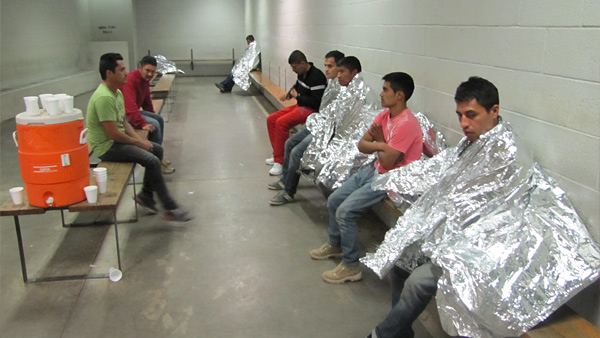
About 65 people a day move through this Border Patrol station in Nogales, Ariz. (Peter O'Dowd/Fronteras Desk)
NOGALES, Mexico — At breakfast time inside a food bank near the border, a nun leads a group of 30 or so recent deportees in the Lord’s Prayer. When she’s finished, an employee takes the microphone and asks, “How many people felt cold when they were with the Border Patrol? Raise your hand.”
Todos, they say. Nearly every hand goes up.
After the meal, Alexy Luis Lopez, 18, and his younger brother, Bryan, recall the two cold days they spent inside U.S. Border Patrol cells. To stay warm, they huddled together with other migrants.
Alexy says the agents took his sweater and left him with a T-shirt. When he told an agent he was cold soon after his arrest, Alexy remembers the agent saying, “maybe we would think about it two times before trying to cross again.”
This is a common complaint from migrants when they’re released from U.S. custody at many points along the border. While a detention cell isn’t designed with comfort in mind, human rights groups and migrants who have entered the country illegally say conditions inside some U.S. Border Patrol stations have become unsafe. Temperatures in some cells are so low that migrants like Alexy say it’s a form of punishment to keep them from crossing again.
... Human rights groups say cold rooms have become a widespread practice across the border, and now the legal battle against them has started.
Read the rest at Fronteras Desk
We invite you to add your charity or supporting organizations' news stories and coming events to PVAngels so we can share them with the world. Do it now!
Celebrate a Healthy Lifestyle
 From activities like hiking, swimming, bike riding and yoga, to restaurants offering healthy menus, Vallarta-Nayarit is the ideal place to continue - or start - your healthy lifestyle routine.
 Banderas Bay offers 34 miles of incomparable coastline in the states of Jalisco and Nayarit, and home to Puerto Vallarta and Riviera Nayarit's many great destinations.