
| Tomato-Farm Workers Toil in 'Circle of Poverty' in Mexico's Poorest States Tracy Wilkinson - The Los Angeles Times | |
| go to original November 12, 2013 |
 |
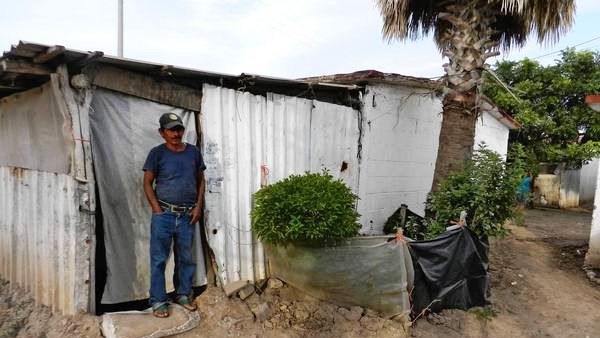
Farmworker Ramiro Castillo stands in front of his living quarters near Villa Juarez in Mexico’s Sinaloa state. Half the tomatoes eaten in the U.S. this time of year come from Sinaloa. (Javier Valdez/LATimes)
VILLA JUAREZ, Mexico — They sure do have tomatoes here in the Mexican state of Sinaloa.
Elongated red ones. Round green ones. Cherry tomatoes, yellow tomatoes, grape tomatoes.
Vast fields of tomatoes, lining the roads out of the Sinaloa capital of Culiacan, miles and miles of mesh tenting shielding the plants from the sun.
Last year, Sinaloa exported 950,000 tons of vegetables, mostly tomatoes and mostly to California and other parts of the United States, worth nearly $1 billion. Half the tomatoes eaten in the United States this time of year are from Sinaloa. The tomato is the symbol on the Sinaloa license plate.
But while a short list of landowners make millions, the planting, weeding, pruning and picking of the vegetables fall to armies of workers from Mexico's poorest states — Oaxaca, Guerrero, Chiapas — who have little opportunity for schooling or other forms of legal employment.
So they are here in these fields, recruited by enganchadores — or "hooks" — who round them up in their home villages, and working in conditions that vary from producer to producer but that many critics say amount to indentured servitude.
Read the rest at The Los Angeles Times
We invite you to add your charity or supporting organizations' news stories and coming events to PVAngels so we can share them with the world. Do it now!
Celebrate a Healthy Lifestyle
 From activities like hiking, swimming, bike riding and yoga, to restaurants offering healthy menus, Vallarta-Nayarit is the ideal place to continue - or start - your healthy lifestyle routine.
 Banderas Bay offers 34 miles of incomparable coastline in the states of Jalisco and Nayarit, and home to Puerto Vallarta and Riviera Nayarit's many great destinations.