
| Team Seeks Evidence of Early Human Settlement in Oaxaca, Mexico EFE | |
| go to original March 9, 2013 |
 |
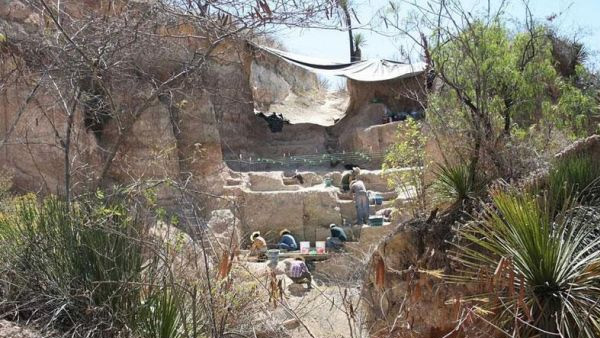
MEXICO CITY - Scientists from Mexico and Spain are examining a site in the southern Mexican state of Oaxaca in search of signs of human habitation as early as 25,000 years ago.
The Chazumba site has already yielded remains of animal species that died out 25,000 years ago, as well as flint chips that may have been made by humans, Mexico's National Institute of Anthropology and History, or INAH, said.
If the chips prove to be man-made, the Chazumba settlers would have been part of "one of the first waves of human groups who arrived in the Americas," according to Spanish scientist Eudald Carbonell, one of the leaders of the project.
Carbonell's Catalan Institute of Human Paleontology and Social Evolution is exploring the site in collaboration with INAH.
Excavations at Chazumba have been under way for two years.
We invite you to add your charity or supporting organizations' news stories and coming events to PVAngels so we can share them with the world. Do it now!
Celebrate a Healthy Lifestyle
 From activities like hiking, swimming, bike riding and yoga, to restaurants offering healthy menus, Vallarta-Nayarit is the ideal place to continue - or start - your healthy lifestyle routine.
 Banderas Bay offers 34 miles of incomparable coastline in the states of Jalisco and Nayarit, and home to Puerto Vallarta and Riviera Nayarit's many great destinations.