
| Mexican Ambassador Says New US Pot Laws Have 'Profound Impact' on Smuggling Efforts Chuck Neubauer - The Washington Times | |
| go to original November 17, 2012 |
 |
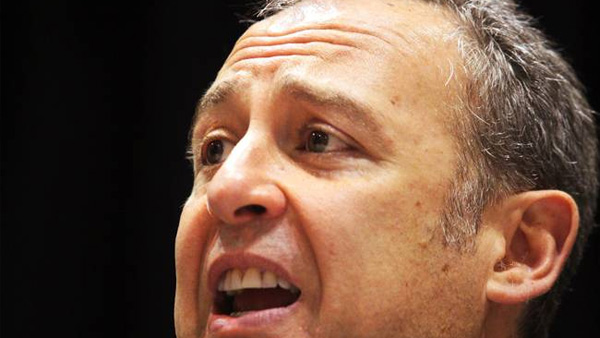
Arturo Sarukhan, ambassador of Mexico to the United States speaks during the U.S.-Mexico Foundation's Ambassadors Panel at Mandalay Bay in Las Vegas. (Las Vegas Sun)
The outgoing Mexican ambassador to the United States said this week the decision by Colorado and Washington state to legalize marijuana for recreational use has had “a profound impact on public perception” in his country in its efforts to halt drug smuggling across the southwestern border.
Ambassador Arturo Sarukhan said it was hard for people “to understand why Mexico is trying to stop marijuana from going to the U.S. if two states have legalized it.” He said people in his country are starting to question whether Mexico should be spending its resources on efforts to stop drugs from crossing the border.
The ambassador, during a wide-ranging conversation at the Inter-American Dialogue, a Washington, D.C.-based center for policy analysis, exchange, and communication on issues in Western Hemisphere affairs, said the votes have not yet had an impact on Mexico’s drug policy but that there could be “significant pressure” to change.
“It will be hard for public officials to explain to the mother of a federal police office killed trying to stop drugs that was a good thing given that two states in the U.S. legalized marijuana,” he said.
Mr. Sarukhan, who was named as Mexico’s ambassador to the U.S. in 2007, will soon be leaving his post with the change in administrations in his country.
On Tuesday, Mexican President-elect Felipe Calderon said the legalization of marijuana for recreational use in Colorado and Washington state limits the United States’s “moral authority” to ask other nations to combat or restrict illegal drug trafficking. He said the legalization of marijuana in the two states — passed during he Nov. 6 general election — represents a fundamental change that requires the rethinking of public policy in the entire Western Hemisphere.
Mr. Calderon’s comments appeared in an interview in the newspaper Milenio, which was published Tuesday.
The Mexican president was joined on Monday by leaders of Belize, Honduras and Costa Rica in calling for the Organization of American States to study the impact of the new laws and saying the United Nations’ General Assembly should hold a special session on the prohibition of drugs by 2015 at the latest.
Mr. Sarukhan, a career diplomat, initially was in 1993 to the Mexican Embassy in the United States where he first served as chief of staff to the Ambassador, and then as head of the counternarcotics office. In 2000, he became chief of policy planning at the foreign ministry and was appointed by President Vincente Fox as Mexican consul general to New York City in 2003. He left the foreign service in 2006 to join the Presidential Campaign of Felipe Calderón as foreign policy advisor and international spokesperson, and became coordinator for foreign affairs in the Calderon transition team.
In November 2006, he received the rank of ambassador, and in February 2007 was appointed Mexican ambassador to the United States.
We invite you to add your charity or supporting organizations' news stories and coming events to PVAngels so we can share them with the world. Do it now!
Celebrate a Healthy Lifestyle
 From activities like hiking, swimming, bike riding and yoga, to restaurants offering healthy menus, Vallarta-Nayarit is the ideal place to continue - or start - your healthy lifestyle routine.
 Banderas Bay offers 34 miles of incomparable coastline in the states of Jalisco and Nayarit, and home to Puerto Vallarta and Riviera Nayarit's many great destinations.