
| The Emerging Pro-Choice Majority in the US Zack Beauchamp - ThinkProgress.org | |
| go to original November 14, 2012 |
 |
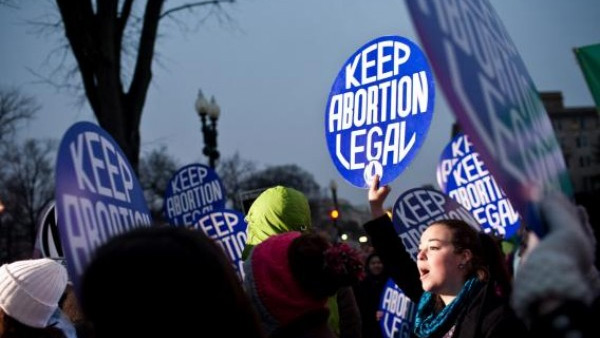
Abortion rights, we’re told, are our Great Divider. America is cleaved in two. Fifty unremitting percent on either side. There is no United States of America, only pro and anti choice America.
But what if that’s not true? Or, more precisely, what if that won’t be true for much longer?
The 2012 election has been touted as a watershed moment for the Democratic Party, but it may have been one for the pro-choice cause as well. And it’s not because the would-be rape caucus was defeated or that pro-choice candidates won big, though those help. Rather, it’s that there’s good reasons to believe the coalition Obama has built is not only durable, but also staunchly pro-choice. If that’s true, it could signify the start of a major shift on what had previously been thought to have been a fundamental fault line in American politics.
Let’s start with the exit polling. The 2012 electorate was overwhelmingly pro-choice; 59 percent said abortion should be legal in all or most cases, while only 36 percent said the reverse. The critical swing states followed the pattern, with some like Virginia falling to the left of the national average. Exit polls should be taken with a grain of salt, of course, but these numbers undeniably suggest American voters are more pro-choice than previously thought, especially in the states up for grabs in Presidential and Senatorial elections.
These data throw a monkey wrench in the conventional wisdom about abortion rights — namely, that it’s an issue that the GOP could use to make inroads with the new Obama coalition. Young voters, women, African-Americans, and Latinos have average-to-conservative views on choice, we’re told. But many identified as pro-choice in 2012. What gives?
Part of the answer is that the general picture is wrong: these key Democratic groups generally track the national average on abortion or tilt left. Though some polls suggest young voters are likely to support restricting abortion rights, the most systematic evidence suggests Milllenials are as, if not more, likely to support keeping abortion legal in all or most cases as the general population. Ditto with women. While African-Americans used to lean right, the most recent polling suggests a decisive pro-choice shift.
Even Latinos, who generally (though not always) tend to oppose abortion rights, have more complicated views than pundits generally let on. While first and second generation Latino-Americans tend to oppose abortion in most or all cases, third generation and higher Latinos support abortion rights by a 19 point margin. Since the Latino population boom is currently being fueled by birth rather than immigration, the third generation cohort seems likely to grow over time. Not incidentally, Latinos who voted in the 2012 election supported keeping abortion legal by a 2:1 margin (though, for it’s worth, the poll didn’t include Texas).
The best news for pro-choicers, however, is yet to come. As these groups become more solidly Democratic over time, they’re also likely to increasingly support abortion rights. Two political scientists, Thomas Carsey and Geoffrey Layman, measured changes in opinion on abortion from 1980-2000 to see how they were related to party identification. They found that while people with strongly held views on abortion tended to pick their party on those grounds, those who give it lesser priority “solve conflicts between their party affiliations and abortion attitudes by changing their views on the issue.” Democrats who vote Democratic for reasons unrelated to abortion tend to simply become pro-choice by default.
You see where this is going. To the extent that 2012 races were principally about abortion (the defeat of Todd Akin, for example), the pro-choice candidate won. In other elections, stridently pro-choice candidates like President Obama were able to cement support from the key “emerging Democratic majority” demographics on issues like the economy or immigration. The longer those groups vote for Democrats, the more likely they are to become pro-choice.
Viewed in this light, this year’s exit polling on abortion don’t look like a fluke.
It looks like a harbinger.
Read more at Think Progress
We invite you to add your charity or supporting organizations' news stories and coming events to PVAngels so we can share them with the world. Do it now!
Celebrate a Healthy Lifestyle
 From activities like hiking, swimming, bike riding and yoga, to restaurants offering healthy menus, Vallarta-Nayarit is the ideal place to continue - or start - your healthy lifestyle routine.
 Banderas Bay offers 34 miles of incomparable coastline in the states of Jalisco and Nayarit, and home to Puerto Vallarta and Riviera Nayarit's many great destinations.