
| New Technologies Aid Archaeological Work in Mexico EFE | |
| go to original October 31, 2012 |
 |
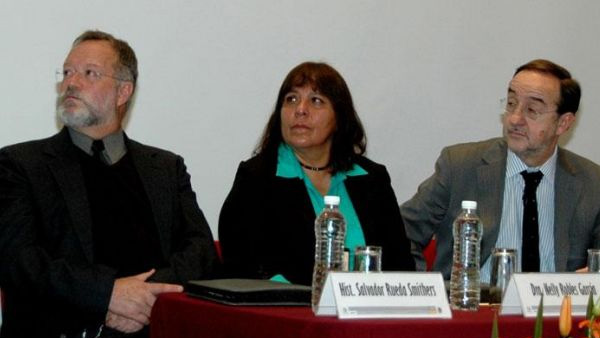
Salvador Rueda, director of the National History Museum; Nelly Robles, national coordinator of the National Anthropology and History Institute; and Alfonso de Maria, INAH director general, during the seminar's opening. (EFE/INAH)
MEXICO CITY - New technologies are helping archaeologists to learn more about and protect sites in Mexico's Mayan zone, a popular area for national and international researchers, experts said at a seminar in the Mexican capital.
"Much of the research is being done with new technologies, such as ground-penetration radar and low-level flights, which allow us to study the subsoil. All of these techniques are being used in the Mayan zone, one of the most researched areas in the world," National Anthropology and History Institute, or INAH, national coordinator Nelly Robles said.
The INAH official said during the "Toward an International Conservation Plan for the Mayan World Heritage Sites" seminar that protection benefits archaeological projects and pre-Columbian sites in the long run.
The two-day seminar, which ended on Tuesday, was being held at the Chapultepec Castle National History Museum in Mexico City.
More than 30 specialists from Honduras, Guatemala, Nicaragua, El Salvador and Mexico are examining the condition of ancient sites and crafting a wide-ranging conservation plan at the gathering.
The seminar was organized by the INAH and UNESCO.
We invite you to add your charity or supporting organizations' news stories and coming events to PVAngels so we can share them with the world. Do it now!
Celebrate a Healthy Lifestyle
 From activities like hiking, swimming, bike riding and yoga, to restaurants offering healthy menus, Vallarta-Nayarit is the ideal place to continue - or start - your healthy lifestyle routine.
 Banderas Bay offers 34 miles of incomparable coastline in the states of Jalisco and Nayarit, and home to Puerto Vallarta and Riviera Nayarit's many great destinations.