
| You Haven't Lived Until You've Celebrated Mexico's Day of the Dead I Want Sun | |
| go to original October 23, 2012 |
 |
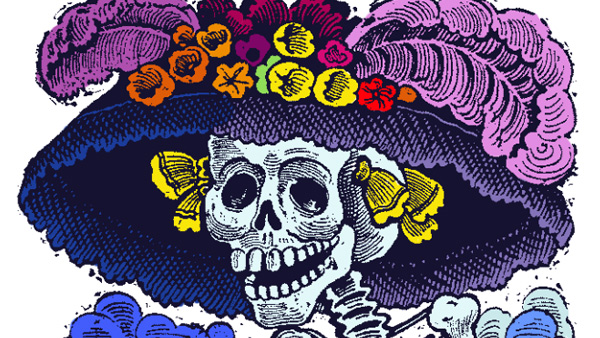
"La Calavera de la Catrina" by José Guadalupe Posada
Often confused with the Western festival of Halloween, Día de los Muertos or Day of the Dead is a Mexican festival held on November 1 and 2 and stems from the time of the Aztecs. However, rather than fearing death and ghouls, this festival is about celebrating the memories of those who have died.
On this day families create elaborate alters to welcome the departed spirits home and often visit the graves of their relatives, fixing them up, placing flowers, usually marigolds, which are used to honour the dead.
Offerings or ofrendas are also made for the deceased relatives, containing pan de muerto or bread of the dead, sugar skulls, candied pumpkin and drinks such as atole (made from corn flour, sugar cane, vanilla and cinnamon). Often family picnics are held by the graveside too.
Rituals celebrating the dead date back around 3,000 years in Mexico when skulls were used as trophies and placed around the house to celebrate death and rebirth.
During the time of the Aztecs, the festival was held in summer and it was overseen by the goddess Michtecacihuatl, the Lady of the Dead. However, when the Spanish conquered Mexico the festival became entwined with Catholic All Saints’ Day and the date was changed to November 1.
Calaveras or skulls are the most prominent symbol throughout Mexico on the Day of the Dead, as well as small sugar skulls, there are skull masks, chocolate skulls and skull costumes. In the 1900s an artist called José Guadalupe Posada created the figure of La Calavera de la Catrina as a parody of a Mexican upper class woman, and today this symbol is used all over Mexico as part of Día de los Muertos.
Similar festivities are also celebrated in Guatemala, Ecuador, Brazil and Bolivia.
We invite you to add your charity or supporting organizations' news stories and coming events to PVAngels so we can share them with the world. Do it now!
Celebrate a Healthy Lifestyle
 From activities like hiking, swimming, bike riding and yoga, to restaurants offering healthy menus, Vallarta-Nayarit is the ideal place to continue - or start - your healthy lifestyle routine.
 Banderas Bay offers 34 miles of incomparable coastline in the states of Jalisco and Nayarit, and home to Puerto Vallarta and Riviera Nayarit's many great destinations.