
| The Environmental Impact Of Wasted Food Ben Schiller - Co.Exist | |
| go to original September 18, 2012 |
 |
 |
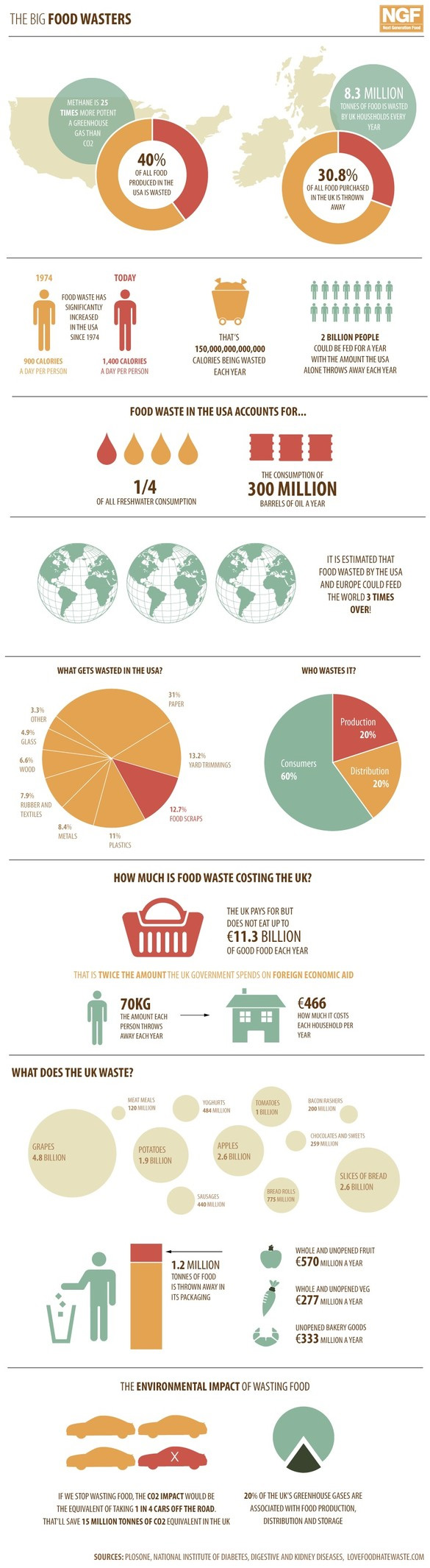
Think twice before you throw away those leftovers. This infographic from U.K. food industry magazine Next Generation Food illustrates the environmental impact of wasted food.
The infographic includes some remarkable statistics taken from a peer-reviewed study about food waste in the U.S. Waste has increased by about 50% since 1974, and now accounts for nearly 40% of all food produced in the U.S. Across the supply chain, we lose 1,400 kilocalories per head per day, or 150 trillion kilocalories each year (kilocalories are the "calories" you see on the back of food packs).
Food waste accounts for a quarter of the freshwater supply, and 300 million gallons of oil a year. That’s a lot of wasted resources at a time of water shortages and higher gas prices. The U.S. consumed 6.9 billion barrels of oil last year, according to the Energy Information Administration.
It wouldn’t be so bad if we did something with the waste other than throwing it in landfills, where it produces methane, a powerful greenhouse gas. Food accounts for 25% of methane produced from landfills, which emit 20% of methane overall. Something to chew on.
Ben Schiller is a staff writer for Co.Exist, and also contributes to the FT, and Yale e360.
We invite you to add your charity or supporting organizations' news stories and coming events to PVAngels so we can share them with the world. Do it now!
Celebrate a Healthy Lifestyle
 From activities like hiking, swimming, bike riding and yoga, to restaurants offering healthy menus, Vallarta-Nayarit is the ideal place to continue - or start - your healthy lifestyle routine.
 Banderas Bay offers 34 miles of incomparable coastline in the states of Jalisco and Nayarit, and home to Puerto Vallarta and Riviera Nayarit's many great destinations.