
| Paralympic Athletes Who Harm Themselves to Perform Better Matt McGrath - BBC News | |
| go to original August 28, 2012 |
 |
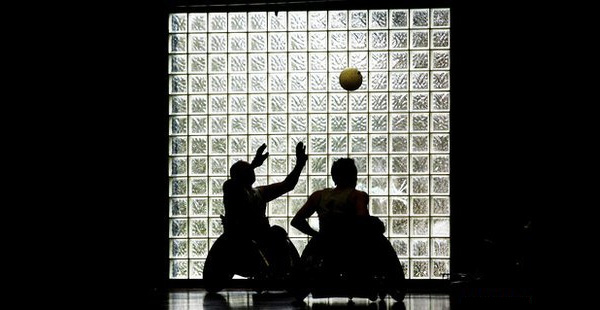
Players in a rugby wheelchair match (Getty Images)
Would you break your own toe to win a Paralympic medal? Would you sit on a sharp object or strangulate your testicles? It's cheating, but a scientist who will be monitoring athletes at the Paralympic Games says a third of competitors with spinal injuries may be harming themselves to boost their performance.
The practice, called "boosting", is designed to increase blood pressure and enhance performance.
It's banned by the International Paralympics Committee (IPC), but some researchers say these are the desperate acts of athletes trying to compete on a level playing field.
"There have been times where I would specifically give my leg or my toe a couple of really good electric shocks" says Brad Zdanivsky, a 36-year-old Canadian quadriplegic climber who has experimented with boosting in the gym.
"That would make my blood pressure jump up and I could do more weights and cycle harder - it is effective."
One British journalist with years of experience covering the Paralympics says he has heard of athletes using small hammers to crack or break a toe.
The point of these activities is to raise the athlete's blood pressure and heart rate.
High blood pressure causes millions of deaths each year around the world, so it may come as a surprise to hear of athletes deliberately "boosting" theirs.
But a raised heart rate and blood pressure are advantages during exercise, as they help deliver more oxygen to hard-working muscles, enabling the athlete to keep going.
For most people, heart rate and blood pressure rise naturally when physical activity increases. But this is not always the case after a spinal cord injury, meaning competitors could tire sooner.
In the world of elite sports, "boosting" could make the difference between winning and losing. But it also boosts the chance of a heart attack or stroke.
When able-bodied competitors engage in hard physical activities like running or swimming, blood pressure and heart rate increase automatically. Athletes with spinal injuries do not get that response. "Boosting" is a short cut to higher blood pressure and the improved performance that comes with it.
In medical terms it's defined as the deliberate induction of a dangerous condition common to quadriplegics called autonomic dysreflexia (AD). Many everyday activities that cause discomfort, even something as trivial as sunburn, can set off the condition naturally.
Zdanivsky turned to boosting when his spine was crushed in a car accident in 1994, because he didn't want the injury to curb his passion for mountain climbing.
"I tried several different ways of doing it. You can allow your bladder to fill, basically don't go to the bathroom for a few hours and let that pain from your bladder do it.
"Some people do that in sports by clipping off a catheter to let the bladder fill - that's the easiest and the most common - and you can quickly get rid of that pain stimulus by letting the urine drain out.
"I took it a notch further by using an electrical stimulus on my leg, my toe and even my testicles."
But boosting comes at a price.
Read more at BBC News
We invite you to add your charity or supporting organizations' news stories and coming events to PVAngels so we can share them with the world. Do it now!
Celebrate a Healthy Lifestyle
 From activities like hiking, swimming, bike riding and yoga, to restaurants offering healthy menus, Vallarta-Nayarit is the ideal place to continue - or start - your healthy lifestyle routine.
 Banderas Bay offers 34 miles of incomparable coastline in the states of Jalisco and Nayarit, and home to Puerto Vallarta and Riviera Nayarit's many great destinations.