
| Mexicans Refuse to Remain in the Dark on Human Trafficking Mariana Rebua Simoes - MediaGlobal | |
| go to original August 25, 2012 |
 |
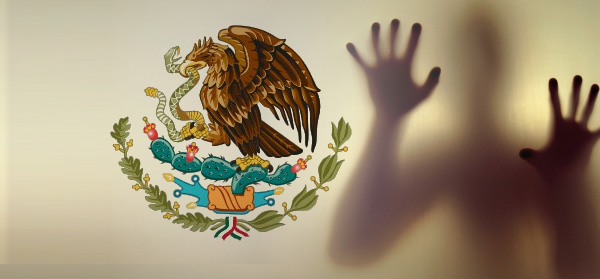
It has been over a year since the poet and journalist Javier Sicilia lost his 24-year old son, Juan Francisco Sicilia, to the wave of violence that has been crashing over Mexico in the last decade. His story represents just one of tens of thousands of others who, like him, have had relatives die or disappear since 2006 when President Felipe Calderon declared the war on drugs.
Juan Francisco’s death, however, provided a platform for other Mexicans to come forward and tell the stories of their own lost sons and daughters. The slogan “we are all Javier Sicilia” swept the nation and with it came the rise of the Movement for Peace with Justice and Dignity or the Movimiento por la Paz con Justicia y Dignidad.
In 2010, media outlets published a list of the movement’s demands to the government: “It is really a war against the people that has cost 40,000 Mexican lives, mostly youths, and another 10,000 – also mostly youths – who inhabit the terrifying limbo that authorities have coldly labeled ‘disappeared.’”
Drawing on nonviolent civil resistance tactics, the movement organized a series of marches throughout Mexico to compel government officials to take action. They also lead several outreach expeditions known as “caravans,” traveling the country to recruit others to fight for their cause.
Some caravans attracted as many as 200,000 participants. One such recruit, Jorge González de León, now head of the Resistance Commission for the Movement for Peace with Justice and Dignity, reminds the public that the war at large stems from a larger network of organized crime.
“Now its not even just drugs,” González de León tells MediaGlobal. “There are still at least 20 other criminal acts – traffic of children, prostitution, traffic of women, traffic of organs…” An Office of the United Nations High Commissioner for Refugees (UNHCR) report issued in June reveals that women are especially targeted by human trafficking in the region.
Maria del Rocio Garcia Gaytan, president of the National Institute of Women, spoke about violence against women in Mexico at the 1051st and 1052nd meetings of the Committee on Elimination of Discrimination against Women that was held at the UN headquarters in New York from 9-27 July.
“Since 2006, the number of violence-affected women with access to government assistance has quadrupled,” Gayton stated. Consequently, public funding to prevent such violence has also increased by 138 percent to $4.29 billion.
While these figures seem promising, the prevention campaign has not been effective for mothers like Margarita López. Her daughter has not only gone missing, but López lacks the necessary means to prove that her daughter’s disappearance is linked to violence in the region. 19-year old Yahaira Guadalupe Bahena López disappeared on 13 April 2011. “My daughter had been taken from her home by a squad of armed men,” López explains.
Yahaira’s marriage to a member of one of Mexico’s elite special operations units gave Margarita hope that government officials would be able to pull some strings and find Yahaira in no time. After filing an official complaint on her daughter’s disappearance, however, she was shocked to find that this wouldn’t be the case.
Government officials interviewed her for nearly eight hours yet her report seemed to lead nowhere. “I provided them with names, addresses, and criminal records of the people that I believe are involved with my daughter’s disappearance…and this information went to the trash,” López says.
Instead of waiting for the government to take action, López, who believed that her daughter had fallen victim to sex trafficking, went looking for her daughter herself. “I went at night to this place, it’s an entertainment center, a club. There I found out that there were in fact girls, who were being prostituted, minors, and if you asked for their services they would take you to them,” López reveals. According to the International Organization for Migration (IOM), sex trafficking in Latin America alone “generates some $16 billion worth of business annually.”
Like Yahaira, now missing for over a year, there are many other unsolved cases out there – few of which are being officially investigated. “There is a chronic pattern of impunity demonstrated by the absence of effective investigations in cases of enforced disappearances,” reported the United Nations Working Group on Enforced or Involuntary Disappearances (WGEID).
Many government officials and influential figures in Mexico insist that the situation isn’t as dire as it seems. Mario Villarreal-Diaz, former Director of Political Development for the state of Nueva León, says he is not familiar with the exact number of people disappeared in Mexico, but that “my perception is that its bad, but its not as large as the mainstream media portrays it,” Villarreal-Diaz tells MediaGlobal.
The March report issued by the WGEID urges the Mexican government to accept that the situation is extreme and calls for urgent action: “The State must recognize the scale of the problem as a first step in developing comprehensive and effective measures to eradicate it.”
Like Sicilia and López, the families of the victims feel compelled to begin mobilizing themselves. “At first it was quite personal, because I am the godfather of Juan Francisco, Javier’s son,” says González de León. “But then I learned that the movement was very interested in pushing certain ideas that I have held for many, many years, which is the empowerment of the common citizen.”
With the International Day of the Victims of Enforced Disappearances http://www.un.org/en/events/disappearancesday/ just around the corner, the international community can add strength to the impact that the voice of the common citizen is making in Mexico. The movement believes that international support can help force the government to take responsibility for the situation and act to end human rights abuses in Mexico.
On 12 August a Caravan for Peace began touring the United States. The families of their victims will spread their message through more than 25 cities and demand the government to put an end to the violence.
We invite you to add your charity or supporting organizations' news stories and coming events to PVAngels so we can share them with the world. Do it now!
Celebrate a Healthy Lifestyle
 From activities like hiking, swimming, bike riding and yoga, to restaurants offering healthy menus, Vallarta-Nayarit is the ideal place to continue - or start - your healthy lifestyle routine.
 Banderas Bay offers 34 miles of incomparable coastline in the states of Jalisco and Nayarit, and home to Puerto Vallarta and Riviera Nayarit's many great destinations.