
| Today's Heroin Cheap, Attractive and Lethal Mike Gallagher - Albuquerque Journal | |
| go to original August 14, 2012 |
 |
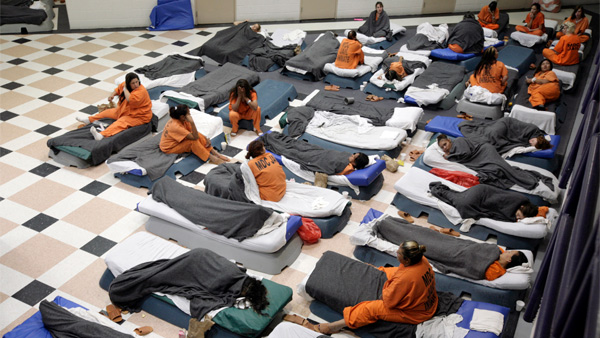
Female inmates detox from heroin at a cell pod at the Metropolitan Detention Center, where inmates are under watch 24/7 in case of seizures or other health problems while “kicking” their habit. (Pat Vasquez-Cunningham/Journal)
During 2005, in the middle of wars in Iraq and Afghanistan, the warnings from Drug Enforcement Administration analysts got lost.
Mexican heroin was becoming more abundant. Purity levels were rising.
The warnings in those internal documents reviewed by the Journal were in stark contrast to what the U.S. State Department had told Congress five years earlier — that Mexican poppy cultivation was at an all-time low and Mexico was no longer a major problem as far as heroin was concerned.
Some of the DEA warnings made it into the public arena in 2006, and they became louder in 2008. Other agencies, such as Homeland Security, took note that the purity of heroin seized at the border was increasing. The DEA found more and more Mexican heroin on the East Coast.
But that story was pushed to the background by the increasing violence between the Mexican drug cartels and the involvement of the Mexican army. Those stories dominated front pages, the Internet and the nightly news. The annual reports on Mexican heroin poppy cultivation in Mexico hardly caused a ripple.
But as cartel violence claimed the lives of more than 50,000 people, Mexican heroin production more than doubled between 2005 and 2007 from 9.6 tons to 21.6 tons as the total acreage under cultivation for poppies boomed.
From 2007 to 2008, heroin production estimates doubled again to 45.6 tons, according to the National Drug Intelligence Center 2010 report.
Instead of producing black tar heroin — a process that uses less opium base — the cartels began refining the opium base into brown powder heroin of much higher purity.
What happened?
The theory put forward by several former DEA analysts is pretty simple.
The Mexican army was redirected from poppy eradication, which involved pulling the plants out by hand and generally making life difficult for the peasant “Gomeros” who grow the poppy and collect the dried poppy gum.
Instead, they were taking the fight to the drug cartels, attempting to keep the peace or making the violence worse, depending on your point of view.
That allowed the heroin poppy crop to sprout throughout the Sierra Madre from Durango and Sinaloa to Mexico’s southern border. Cartel chemists trained in the more sophisticated manufacturing of methamphetamine were enlisted to make better quality heroin.
They made a lot of it.
And all that product had to go somewhere.
It came to the United States.
Read more at The Albuquerque Journal
We invite you to add your charity or supporting organizations' news stories and coming events to PVAngels so we can share them with the world. Do it now!
Celebrate a Healthy Lifestyle
 From activities like hiking, swimming, bike riding and yoga, to restaurants offering healthy menus, Vallarta-Nayarit is the ideal place to continue - or start - your healthy lifestyle routine.
 Banderas Bay offers 34 miles of incomparable coastline in the states of Jalisco and Nayarit, and home to Puerto Vallarta and Riviera Nayarit's many great destinations.