
| Javier Sicilia: My Grief is Mexico's Grief Wim Jansen - RNW | |
| go to original July 30, 2012 |
 |
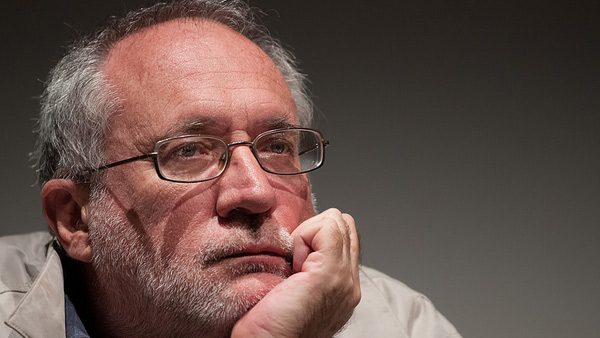
Grief and loss drive Mexican poet Javier Sicilia's determination to challenge corruption and poor governance in his country. (Eneas De Troya/flickr)
“My grief is Mexico’s grief” says Javier Sicilia. In a country where critical journalists risk their lives, this poet gives voice to a widespread discontent. He has motivated hundreds of thousands of his country men and women to protest against the violence, the drugs mafia and the government.
Javier Sicilia has not written another poem since the murder of his son and six friends in March last year. He holds the government responsible for the violence in the country and thus the death of his son. ”An absurd crime, born of corruption and impunity” is how he describes the bloodbath which has cost almost 60,000 Mexicans their lives over the past six years.
Had enough
Estamos hasta la madre – we’ve had a gutful! - is the slogan under which a growing army of his supporters, each with their own personal tragedy, has begun demanding political action in impressive protest marches.
During last June’s presidential campaign, each of the candidates attempted to embrace Sicilia in front of the cameras. The poet’s response, also captured on camera, was brutal: “twelve years in power and your party has made a graveyard of this country,” he snapped at Josefina Vazquez Mota of the then ruling liberal PAN party. The eventual winner Enrique Peña Nieto was told that his conservative PRI, the party that ruled Mexico for 60 years, was responsible for laying the foundations of the all-consuming corruption. And the progressive Andres Lopez Obrador was reminded that many of his left-wing comrades have been named in various corruption scandals.
Sicilia does not speak readily about himself or the personal pain that has driven him to protest on the streets. But he admits to the tension between the poet and the activist:
“I never thought a poet should be politically active. Because one way or another, a poet expresses a deeper sense of reality. Of course, he must be aware of what is going on in his world. But not driven by the nearness of death to a life of political activism."
How did it come to this?
“Since President Felipe Calderón came to power in 2006 and unleashed his war against the drug cartels, the situation in this country has deteriorated dramatically. Most citizens live in uncertainty, because no street is safe any longer and crime goes unpunished.
“It is under these conditions that my son and his six friends were killed. That is why I feel compelled to protest publicly against this absurd crime, born of corruption and impunity. I began to protest against the government, and suddenly victims began emerging everywhere. Forgotten victims who had been treated badly by public prosecutors and themselves criminalised."
Is there space for your own grief?
“I bear my pain. The death of a child in such circumstances is a terrible thing. It is a yoke I must submit to for the rest of my life. It is unnatural in every way. There are no words that can describe this. It goes against every law of nature.
"But I am given much love and support. Sharing the pain helps you stay alive, it helps keep you afloat."
If you have the energy to take on this fight then there is still hope?
“Yes, I believe that this movement, despite everything we have suffered, is a movement of great optimism. Despite the barbarity of the criminals and the folly of the state I do not think you can speak of the moral decline of the Mexican people themselves."
What was the moment when you realised that the death of your son had not been in vain?
“I don’t think it was in vain. It has led to something good and valuable, but that can never make up for my son’s death. Nothing makes up for the death of a loved one. I hope that he is proud of me, that I have done what I must do in his name. He told me that I would change this country and he is playing his part in that change."
Are you still writing poems?
“No, not one since my son’s death. I still write sometimes, novels and for newspapers. But poetry…I think poetry is the most sacred form of language. It is a form of protest. But even though I no longer write poems, the poet in me is still alive. I look as a poet, I think as a poet and I try to live as a poet."
We invite you to add your charity or supporting organizations' news stories and coming events to PVAngels so we can share them with the world. Do it now!
Celebrate a Healthy Lifestyle
 From activities like hiking, swimming, bike riding and yoga, to restaurants offering healthy menus, Vallarta-Nayarit is the ideal place to continue - or start - your healthy lifestyle routine.
 Banderas Bay offers 34 miles of incomparable coastline in the states of Jalisco and Nayarit, and home to Puerto Vallarta and Riviera Nayarit's many great destinations.