
| Extinction Alert Issued Over Mexico’s Critically Endangered Vaquita Karen McVeigh - The Guardian | |
| go to original August 8, 2023 |
 |
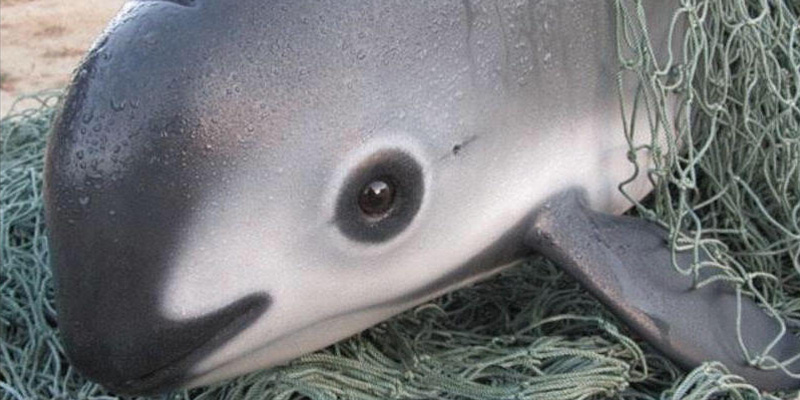
The International Whaling Commission has issued the first “extinction alert” in its 70-year history, to warn of the danger facing the vaquita, the world’s tiniest and most critically endangered marine mammal.
A recent study shows that the small porpoise, found only in the Gulf of California in Mexico, has only 10 individuals left. It has been driven to the edge of extinction due to entanglement in fishing nets known as “gillnets”, which are now illegal in the area.
The scientific committee of the IWC said in a statement it had grave concerns over the survival of the vaquita and had issued the alert to highlight the actions needed to save it. It said extinction of the porpoise was inevitable unless all gillnets were replaced with alternative fishing gear that protected it and the livelihoods of fishers.
“If this doesn’t happen now, it will be too late,” it said.
Dr Lindsay Porter, the vice-chair of the IWC’s scientific committee said: “We wanted, with the extinction alert, to send the message to a wider audience and for everyone to understand how serious this is.”
The porpoises, which measure about 1.2-1.5 metres, become entangled and die in gillnets, which are flat fishing nets suspended vertically in the water. These nets are used by poachers to hunt the totoaba, an endangered fish prized for its swim bladder in Chinese medicine and sold at vast profits on the black market in China and Hong Kong. During the rise in the totoaba trade, the vaquita’s population has plummeted from 567 to 10 over the last decade.
Read the rest at The Guardian
We invite you to add your charity or supporting organizations' news stories and coming events to PVAngels so we can share them with the world. Do it now!
Celebrate a Healthy Lifestyle
 From activities like hiking, swimming, bike riding and yoga, to restaurants offering healthy menus, Vallarta-Nayarit is the ideal place to continue - or start - your healthy lifestyle routine.
 Banderas Bay offers 34 miles of incomparable coastline in the states of Jalisco and Nayarit, and home to Puerto Vallarta and Riviera Nayarit's many great destinations.