
| How Mexico’s Cartel Jalisco Nueva Generación Rules Vanda Felbab-Brown - Mexico Today | |
| go to original August 4, 2022 |
 |
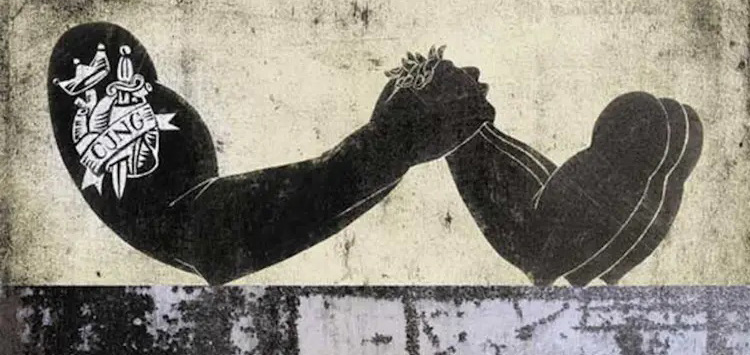
Large segments of Mexico’s people, territory, and economy are falling under the rule of Mexican criminal groups even in areas where violence has not flared up or has declined, with the declines in violence mostly the result of the vagaries of Mexican criminal markets, not policies, or the lack of policy. But the various criminal groups, including the two largest ones – Cartel Jalisco Nueva Generación (CJNG) and the Sinaloa Cartel – deploy substantially different approaches to their rule.
The evolving rule and governance by both cartels also vary regionally, influenced by local structural conditions and political culture and by local leadership of the criminal groups. Drawing on my fieldwork in various parts of Mexico in October and November 2021, I outline today some of the dimensions and changes to the rule by CJNG and the way it differs from the Sinaloa Cartel’s rule. In my last oped, I focused on the strategies, choices, and approaches to rule of the Sinaloa Cartel.
CJNG and the Sinaloa Cartel differ in how they rule both economies and people.
A key aspect of the Sinaloa Cartel’s strategic modus operandi is seeking to take over the entire vertical chain of an economy and industry – whether legal or illegal. In contrast, CJNG has often preferred to act as a tax master and sometimes franchise licenser: taxing all local businesses, without, at least initially, seeking full control across the entire vertical chain of an economy. Replicating its policies in the state of Jalisco, in the new territories that it conquers, the Cartel licenses not just a variety of criminal rackets, such as drug dealing and trafficking and prostitution, but also legal sales, such as of tobacco, alcohol, and even tortillas.
That strategy harkens back to Don Berna’s Oficina de Envigado in Medellín, Colombia though in many of its newly conquered territories, CJNG doesn’t enjoy anywhere the level of thick and intricate connections to local politicians and businesses that Don Berna’s criminal machinery in Medellín did.
Only slowly and sporadically has CJNG begun to move toward a more systematic effort to take over the entire vertical chain, a decade and half behind the Sinaloa Cartel in that strategy.
Yet while taxation-only may seem less aggressive and easier for local communities and businesses to adapt to than Sinaloa’s rule, it actually isn’t for two reasons:
First, the CJNG “taxes,” like those of the Zetas earlier, which in many ways CJNG emulates, tend to be higher than those of Sinaloa, my interlocutors in Michoacán, Guerrero, Baja California, and Baja California Sur told me. While CJNG has mostly avoided the Zetas’ frequent mistake of setting the extortion fees so high that they accidentally bankrupt businesses, they still tend to be far more onerous than those of the Sinaloa Cartel.
Moreover, unlike, the Sinaloa Cartel’s rule, the CJNG takeover and domination are based on brazen violence. Its modus operandi is to be more ostentatiously violent than anyone else around. Brazenness, brutality, and aggressive expansion are its signature approach at both the strategic and tactical levels, making both the takeover and the forced regular interactions with the group highly grating to both local communities and big businesses. While my interlocutors described the Sinaloa Cartel extortion fee collectors as “buttoned-down criminals” and “polite extortionists” with whom it wasn’t “so bad and scary to deal with,” the CJNG operatives were described as “brash, crude, frightening,” and “a plague to be rid of.”
CJNG’s penchant for brazenness also manifests itself in its showcase public executions and frequent displays of its firepower and sophisticated weaponry: Its heavy assault weapons mostly outmatch the arms and equipment that Mexican police and National Guard have. CJNG often puts on dramatic videos of the might of its weapons and unfettered capacity to mass fighters and vehicles, seemingly without any effort by the Mexican government to prevent such coercion.
Not only does the Cartel not shy from attacking police stations, burning down police vehicles, or, hunting down police officers in their homes, it indulges in that strategy to exhibit its impunity and fearlessness.
Read the rest at Mexico Today
Related: Jalisco New Generation Cartel Controls All but Four Mexican States (PVDN)
We invite you to add your charity or supporting organizations' news stories and coming events to PVAngels so we can share them with the world. Do it now!
Celebrate a Healthy Lifestyle
 From activities like hiking, swimming, bike riding and yoga, to restaurants offering healthy menus, Vallarta-Nayarit is the ideal place to continue - or start - your healthy lifestyle routine.
 Banderas Bay offers 34 miles of incomparable coastline in the states of Jalisco and Nayarit, and home to Puerto Vallarta and Riviera Nayarit's many great destinations.