
| How the ‘Millennium Migration’ from Latin America Shaped the U.S. for the Better Peter Costantini - Foreign Policy In Focus | |
| go to original October 30, 2017 |
 |
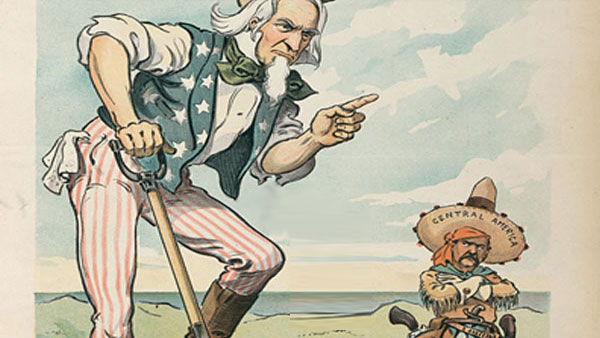
From the last part of the past century through the beginning of the Great Recession, an epochal exodus of Mesoamericans poured across the border into el Norte. The tide rose gradually in the 1970s, accelerated in the 1990s, and crested around 2000. It subsided through the following years, and ended with the bursting of the housing bubble around 2008. Let’s call it the Millennium Migration.
The migrants were driven by powerful push-pull effects: a debilitating depression with 20 percent unemployment following the mid-1990s peso crisis in Mexico, next door to a boom in the United States that raised even low wages and offered plentiful jobs. Meanwhile, the U.S. workforce was shrinking due to low birth rates. The North American Free Trade Agreement and the Mexican government’s elimination of protections for small farmers drove a couple million of them off their land. Many went north.
The Millennium Migration built on what had been going on for over a century: circular migration back and forth across the border to the rhythms of the U.S. and Mexican economies. Some 60 percent of the voyagers did not have papers. Many were driven by what might be called the Mexican Dream — sending home remittances to support their family and returning after a few years to build a house or open a small business. But this time the demand for their labor pulled them into new fields beyond agriculture, like residential construction and food service. And changing enforcement patterns pushed some towards new areas of the Midwest, Southeast, and Northeast.
This migratory surge was probably the largest in United States history in absolute numbers, although proportionately to population it was not as high as the peaks of the 19th and early 20th centuries. It left Latinos the largest minority group in the United States, with 16.3 percent of the population, and shifted demographic and political balances in much of the West and Southwest.
The Millennium influx slowed gradually after the dot-com crash and ended with the Great Recession. The bursting of the housing bubble deflated residential construction, along with other sectors where many immigrants worked. From 2008 on, slightly more undocumented people went back to Mexico than entered the U.S., and the population of undocumented Mexicans plummeted by 18.8 percent from 2007 to 2014. The total Mexican-born and total undocumented population from everywhere both declined, but less steeply. In other words, unauthorized immigration ultimately proved to be self-regulating in response to the economy.
Today, another mass migration from the south is increasingly unlikely. Some of the factors pressuring migrants to leave Mexico receded: Birth and population growth rates shrank, along with numbers of prime-age job seekers, while life expectancy and the economy grew. Now Central Americans and others have surpassed Mexicans entering at the southern border, although in much smaller numbers than before.
Read the rest at Foreign Policy In Focus
Related: Murder: the United States’ Biggest Biggest Export to Central America (The Herald)
We invite you to add your charity or supporting organizations' news stories and coming events to PVAngels so we can share them with the world. Do it now!
Celebrate a Healthy Lifestyle
 From activities like hiking, swimming, bike riding and yoga, to restaurants offering healthy menus, Vallarta-Nayarit is the ideal place to continue - or start - your healthy lifestyle routine.
 Banderas Bay offers 34 miles of incomparable coastline in the states of Jalisco and Nayarit, and home to Puerto Vallarta and Riviera Nayarit's many great destinations.