
| The American Reporter Who Rode with Mexican Revolutionary Leader Pancho Villa Sean Braswell - Ozy | |
| go to original October 24, 2017 |
 |
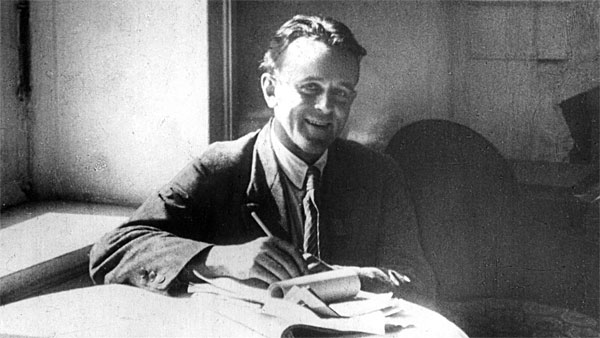
John Reed, American journalist and Communist activist was buried inside the Kremlin wall (Wikipedia)
There was a revolution going on in Mexico, just south of the American border. A rebel leader know as Francisco “Pancho” Villa had won two major military victories against the nation’s military leader Gen. Victoriano Huerta in late 1913. But U.S. journalists — barred by the military from entering Mexico and deathly afraid of what might happen to gringo reporters in a land of machetes and machine guns — covered the war from the sidelines, submitting their copy on the larger-than-life Pancho Villa and his horseback army from the border town of Presidio.
Enter John “Jack” Reed, a 26-year-old Harvard graduate and aspiring journalist whose desire for adventure outweighed his fear of death. When Reed arrived in Presidio that winter, he immediately requested an interview with the Mexican general in charge of the town of Ojinaga, across the border. “If you set foot in Ojinaga,” the reply to Reed stated, “I will stand you sideways against a wall, and with my own hand take great pleasure in shooting furrows in your back.” Reed’s response? He left Presidio … waded across the Rio Grande and walked into Ojinaga. By Christmas Day, Reed was in Chihuahua City, Pancho Villa’s headquarters, watching the great man in person as his jubilant followers serenaded him with chants of “Viva Villa.”
Called the “father of modern journalism,” Reed has been played by no less than Warren Beatty (in the 1981 film Reds), and he is, in many ways, the forefather of the gonzo-style “immersive journalism” practiced by Vice and other outlets today. But in his own time, Reed was what few reporters get to be: a rock star. And like many rock stars, the adventure-seeking young journalist would die well before his time.
Before Reed became a giant of American journalism, he was a sickly child in upper-class Portland, Oregon. As Robert Rosenstone chronicles in Romantic Revolutionary, the young Reed came out of his shell at Harvard, where he was the editor of two college newspapers, and even a cheerleader. But the rebel Westerner was no fan of some of the Eastern aristocrats who populated the school. “The more I met, the more their cold, cruel stupidity repelled me,” Reed wrote of his classmates. “I began to pity them for their lack of imagination and the narrowness of their glittering lives.”
Reed was restless but determined, and he soon found an outlet for his energies in reporting on war, strikes and other social conflicts. In 1913, he covered a silk workers’ strike in Paterson, New Jersey, and got himself arrested — the first of many legal run-ins — for mouthing off to police on the picket lines. Reed’s reporting from Mexico later that year would make him the highest-paid journalist in the United States. Most Americans had a stereotypical view of Mexicans, and the U.S. media generally portrayed the war as a “comic opera revolution.” Reed was determined to portray the Mexican people as they really were, and based on firsthand reporting. “If anybody wants to know the truth at first hand, he must do as I did — go through the country,” Reed wrote. “You will make the astonishing discovery that [the Mexican people] are sick of war — that, curiously enough, they do not enjoy starvation … that loss of their homes … does not appeal to them much.” Reed rode with Pancho Villa for several weeks, calling the revolutionary leader “the most natural human being I ever saw.”
When Reed returned to the U.S., he used his newfound fame to focus on the issues he most cared about. He became increasingly critical of his homeland, its involvement in World War I and its rampant inequality. “He was one of those larger-than-life people,” says Rosenstone, “which made him both attractive to many people and an enormous pain in the ass for others.”
Check out The Thread, OZY’s brand-new weekly podcast, unlocking a series of linked histories starting with the murder of John Lennon and stretching all the way back to the Russian Revolution. Subscribe now to follow The Thread on Apple or on OZY.com.
Read the rest at Ozy
We invite you to add your charity or supporting organizations' news stories and coming events to PVAngels so we can share them with the world. Do it now!
Celebrate a Healthy Lifestyle
 From activities like hiking, swimming, bike riding and yoga, to restaurants offering healthy menus, Vallarta-Nayarit is the ideal place to continue - or start - your healthy lifestyle routine.
 Banderas Bay offers 34 miles of incomparable coastline in the states of Jalisco and Nayarit, and home to Puerto Vallarta and Riviera Nayarit's many great destinations.