
| Cactus Popsicle: Touring the CDMX Ice Cream Scene Ben Herrera - Culinary Backstreets | |
| go to original August 16, 2017 |
 |
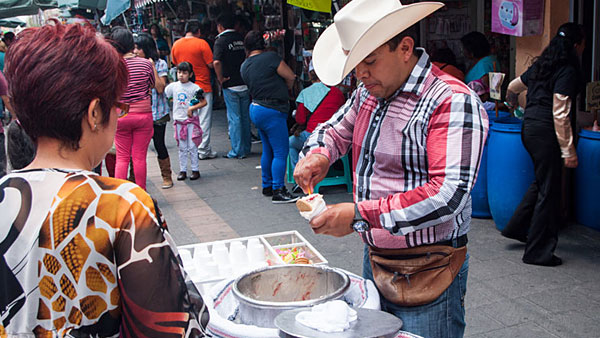
In Mexican cuisine, sweets are for the most part simple treats that are enjoyed at the park, market or beach, such as caramelized fruits and vegetables, blocks of nuts or amaranth seeds held together with honey, or small rice paper cakes filled with honey. The common denominator of most of these sweets is their simplicity. When it comes to ice cream and other frozen delights, however, the country truly shines, with an astounding variety of cold treats to please sweet tooths of every persuasion.
The range of frozen desserts found in Mexico City includes everything from raspados – ice shavings served in plastic bags or cups to which a flavor of choice is added – to Italian gelato served in some of the most sophisticated restaurants in town. One of the most common frozen treats in the city is the simple paleta, a flavored popsicle made with natural juices and fruits. There are paletas made with processed flavorings, but most Defeños, or residents of Mexico City, prefer to buy natural popsicles from small paleterías (popsicle carts on the street) or neverías (ice cream parlors).
Ice cream, or a form of it, was first brought to Mexico in the 16th century by the Spanish conquistadores, but it wasn’t until the 18th century that it became a popular treat among the privileged classes of colonial society. After Mexican independence in 1821, and the resulting demise of the Spanish Crown’s three-century monopoly on the ice trade, ice cream finally became more accessible to the masses, and became a popular treat throughout the country. When Mexico City incorporated neighboring towns such as Coyoacán, Xochimilco and Tulyehualco in the 20th century, it also absorbed a strong ice-cream-making tradition. Today, central Coyoacán is still famous for its many neverías and paleterías, and a trip to this bohemian neighborhood is not complete without a stop at one of them.
The ice cream sold by the roadside in the more rural areas of Xochimilco and Tulyehualco is also something of a required snack for all travelers entering or leaving the city. The bright tarps and wooden buckets of ice in which vendors prepare their ice cream are unmistakable. Flavors range from the traditional vanilla, chocolate and strawberry to the more exotic rose petal, tequila and nopal,or cactus patties. Every year in early spring, Tulyehualco holds an ice cream fair that is one of the most exotic culinary adventures the city has to offer. Vendors cater to both traditional palates and to more adventurous eaters, with a myriad selection of flavors of which the more exotic can include beer, mole, various kinds of chilies, oyster (ostión), and even snake (vibora) and skunk (zorillo).
For the visitor who can’t make it to the annual ice cream bonanza in Tulyehualco, check out recommendations of Mexico City venues that won’t disappoint at Culinary Backstreets.
We invite you to add your charity or supporting organizations' news stories and coming events to PVAngels so we can share them with the world. Do it now!
Celebrate a Healthy Lifestyle
 From activities like hiking, swimming, bike riding and yoga, to restaurants offering healthy menus, Vallarta-Nayarit is the ideal place to continue - or start - your healthy lifestyle routine.
 Banderas Bay offers 34 miles of incomparable coastline in the states of Jalisco and Nayarit, and home to Puerto Vallarta and Riviera Nayarit's many great destinations.