
| UN Reports Millions of Women and Children for Sale for Sex, Slavery, Organs... Baher Kamal - Inter Press Service | |
| go to original August 9, 2017 |
 |
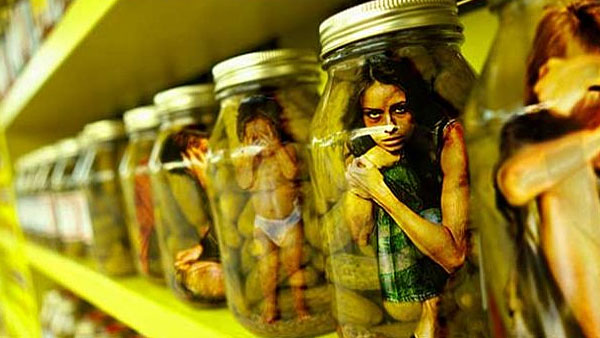
Human trafficking has become a global multi-billion-dollar enterprise, affecting nearly every country in the world, according to UNODC (UN in Armenia)
It is happening now. Millions of humans are forced to flee armed conflicts, climate change, inequalities, and extreme poverty. They fall easy prey to traffickers lurking anyone who can be subjected to sexual exploitation, forced labour and even sell their skin and organs.
Just as tragically, 79 per cent of all detected trafficking victims are women and children, according to the UN Office on Drugs and Crime (UNODC) Global Report on Trafficking in Persons.
The drama is immense. Every year, millions of children, women and men fall into the hands of traffickers, lured by fake promises and deceit, the United Nations reports once more, this time ahead of the World Day against Trafficking in Persons, marked every year on 30 July.
The “horrendous crime” is being committed now, while you are reading this article, and in public “salve markets”. (See African Migrants Bought and Sold Openly in ‘Slave Markets’ in Libya)
Buying and selling migrants is a big business. In fact, human trafficking has become a global multi-billion-dollar enterprise, affecting nearly every country in the world, according to UNODC’s executive director Yury Fedotov.
Stolen
“Today, there are millions of people whose liberty, dignity and essential human rights have been stolen. They are coerced into sexual exploitation, forced labour, domestic servitude, forced begging, stealing, online pornography, and even compelled to “sell” skin organs.“
This inhumane business is far from slowing down–from 2012-2014, more than 500 different trafficking flows were detected and countries in Western and Southern Europe detected victims of 137 different citizenships, according to UNODC. In short, “the crime of human trafficking is occurring almost everywhere.”
In terms of the different types of trafficking, sexual exploitation and forced labour are the most prominent, says the report, adding that trafficking can, however, have numerous other forms including: victims compelled to act as beggars, forced into sham marriages, benefit fraud, pornography production, organ removal, among others.
Many countries have criminalised most forms of trafficking as set out in the UN Trafficking in Persons Protocol. The number of countries doing this has increased from 33 in 2003 to 158 in 2016. Such an exponential increase is welcomed and it has helped to assist the victims and to prosecute the traffickers, said Fedotov.
“Unfortunately, the average number of convictions remains low. UNODC’s findings show that there is a close correlation between the length of time the trafficking law has been on the statute books and the conviction rate.”
Read the rest at Inter Press Service | Español
IPS is an international communication institution with a global news agency at its core, raising the voices of the South and civil society on issues of development, globalisation, human rights and the environment. Check out the website at IPSNews.net
We invite you to add your charity or supporting organizations' news stories and coming events to PVAngels so we can share them with the world. Do it now!
Celebrate a Healthy Lifestyle
 From activities like hiking, swimming, bike riding and yoga, to restaurants offering healthy menus, Vallarta-Nayarit is the ideal place to continue - or start - your healthy lifestyle routine.
 Banderas Bay offers 34 miles of incomparable coastline in the states of Jalisco and Nayarit, and home to Puerto Vallarta and Riviera Nayarit's many great destinations.