
| Stateless in Mexico: Portraits of Guatemalan Refugees in Limbo Oscar Gil-Garcia - The Conversation | |
| go to original August 8, 2017 |
 |
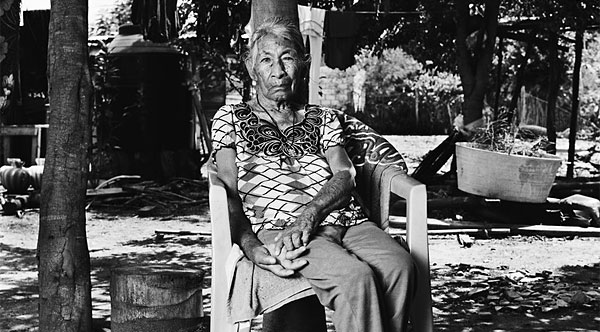
Maria Miguel Pedro (Manuel Gil)
Many of Guatemala’s refugees produced by its long civil war are still stateless today.
The war lasted between 1954 and 1996 and inflicted significant harm, particularly on indigenous Mayans. The conflict prompted 200,000 Guatemalans to flee to Mexico, where up to 43,000 refugees established settlement camps. For more than a decade I have conducted research in La Gloria, Mexico, the largest of these settlements, near the border of Guatemala.
Currently, due to strict naturalization laws, more than 27,000 Guatemalans throughout Mexico remain stateless. In turn, many Guatemalan refugees have migrated to the U.S., only to face similarly draconian policies.
In 2007, I began a photo-documentary project with my brother Manuel Gil, a professional photographer. Our aim was to learn about the challenges these people face as stateless refugees for more than 30 years, and the impact immigration policies have on their families. Here’s what we found.
Stateless in Mexico
In 2014, Gaspar Felix Juan, a community leader from La Gloria, requested my help to obtain legal status for several stateless Guatemalans in Mexico. The formal end of a legalization program (1995-2005) in Mexico for refugees who fled Guatemala’s civil war left many without legal status. All of them lived in former refugee settlement communities throughout the southern state of Chiapas. In collaboration with Mexican attorney Julia Torres, we filed a grievance to the Mexican government regarding the prolonged delay in processing naturalization claims. We also requested the legalization of 26 petitioners.
María Miguel Pedro, one of the petitioners, was 86 years old at the time. The mother of five, with 40 grandchildren – all Mexican-born citizens – has remained stateless in Mexico for more than 30 years. In 2016, she suffered a stroke, leaving her paralyzed and mute. Lack of legal status limits her access to public health insurance. Consequently, she relies on her frail 90-year-old husband (who has legal status) to obtain affordable medications.
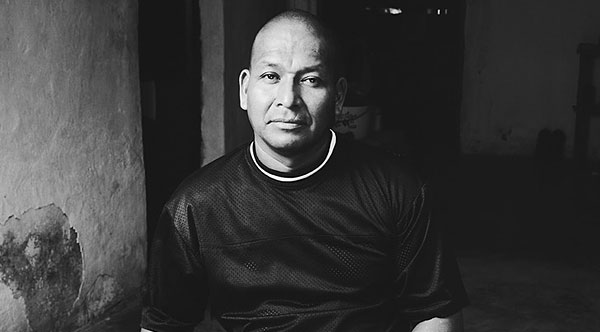
Angel Pascual Francisco (Manuel Gil)
Another petitioner, Ángel Pascual Francisco, is a father of four. Two of his children live in the U.S. When asked why he did not join them, he said, “I am fearful that I will get caught entering the U.S., and as I don’t have any papers identifying my national origin, I am afraid to be sent to Guatemala.”
When asked what fueled such terror, he answered: “At a young age I witnessed my father, my [pregnant] sister and younger [five-year-old] brother get killed in Guatemala.” This violent episode continues to haunt Ángel, who suffers from anxiety and depression. Legal status would allow Ángel to travel and seek employment in Mexico without fear of deportation to Guatemala.
Guatemalan exiles, despite lacking legal status, have built connections with partners and established families in Mexico and the U.S. In contrast to frequent media coverage that depict migrants as threats, our work attempts to represent Guatemalan exiles in a dignified light. We hope to show that, like millions of migrants across the globe, these people seek a sense of belonging in their host nation state.
Migration to Mexico
These portraits are part of a bigger history of Mexico’s complex relationship with indigenous and migrant populations.
Since its founding, the Mexican government actively promoted immigration policies that favored entrance of white immigrants from Europe. The Mexican government also encouraged out-migration during the 20th century, fueled by U.S. policies and labor demand. These immigration policies informed how the Mexican government received Guatemalan refugees.
A year before the war in Guatemala ended, the Mexican government announced a naturalization program, but it wasn’t until 2001 that Mexico reduced requirements for legal entry and provided temporary visas to Guatemalan refugees. The travel and employment restrictions on these visas, however, compounded poverty among refugees. Research has shown that bureaucratic mismanagement undermined the Mexican legalization program. The departure of NGOs and humanitarian agencies who were supporting refugees decreased political pressure on the Mexican state to support refugees. Thus, the government ended the legalization program in 2005.
Violence and insecurity in Guatemala since the war is still pushing people to flee, and prevents many who fled during the war from returning.
Read the rest at The Conversation
We invite you to add your charity or supporting organizations' news stories and coming events to PVAngels so we can share them with the world. Do it now!
Celebrate a Healthy Lifestyle
 From activities like hiking, swimming, bike riding and yoga, to restaurants offering healthy menus, Vallarta-Nayarit is the ideal place to continue - or start - your healthy lifestyle routine.
 Banderas Bay offers 34 miles of incomparable coastline in the states of Jalisco and Nayarit, and home to Puerto Vallarta and Riviera Nayarit's many great destinations.