
| Without US Visas, Thousands of Workers Are Stuck at Home in Mexico Paulina Villegas and Victoria Burnett - The New York Times | |
| go to original July 23, 2017 |
 |
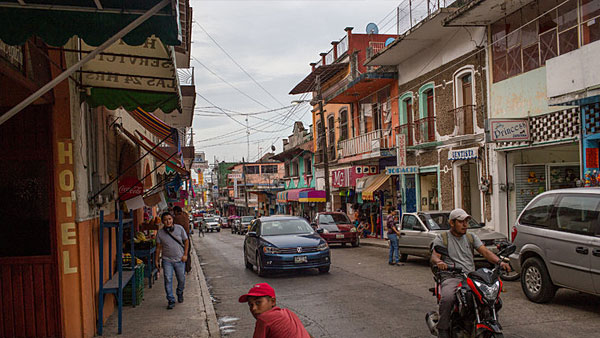
Thousands of migrants leave Tlapacoyan, Mexico, each year to work in the United States with an H-2B visa. But changes to immigration laws have reduced the number of people leaving this summer. (Brett Gundlock/The New York Times)
Francisco Trujillo heads north each summer to do a job that few Americans want: a four-month stint operating carnival rides, mopping up vomit and sleeping in a cramped trailer with other workers.
His annual journey to the United States was a routine shared by many in the shabby city of Tlapacoyan, about 190 miles east of Mexico City in the hills of Veracruz state, which supplies two-thirds or more of the 7,000 foreign workers hired by America’s amusement sector each year.
This year, however, Mr. Trujillo, 32, is not selling tickets for the Super Shot vertical drop or doling out funnel cakes. Caught in a debate over how many visas the United States government should issue to seasonal workers, he is among thousands of Mexicans who are stuck at home, unable to get permission to work across the border.
... As American politicians and business owners wrangle over the limits on the number of H-2B visas for unskilled, nonagricultural workers, Tlapacoyan (pronounced tla-pa-COY-an), with about 60,000 residents in the town and surrounding area, offers a glimpse of how the impasse has stung in Mexico. Last year, Mexicans received more than 70 percent of the approximately 84,000 H-2B visas issued by the United States to migrant workers worldwide.
The lack of visas has denied hundreds of families in the city an annual income that saves them from living hand-to-mouth and deepened the problems of a town struggling, like much of the state, with high crime rates. Of an estimated 4,600 to 6,000 residents who normally work the carnival season according to city officials and recruiters, about a third have been left behind.
Instead, they are selling tacos and driving taxis, or working for just over $1 an hour in the tangerine and banana fields that surround the town. Some use Google Translate and WhatsApp to check their visa status with their former American employers.
Read the rest at The New York Times
Related: California Farmers Bemoan Loss of Illegal Alien Workers (Hot Air)
We invite you to add your charity or supporting organizations' news stories and coming events to PVAngels so we can share them with the world. Do it now!
Celebrate a Healthy Lifestyle
 From activities like hiking, swimming, bike riding and yoga, to restaurants offering healthy menus, Vallarta-Nayarit is the ideal place to continue - or start - your healthy lifestyle routine.
 Banderas Bay offers 34 miles of incomparable coastline in the states of Jalisco and Nayarit, and home to Puerto Vallarta and Riviera Nayarit's many great destinations.