
| College Students Show How Easy It Is to Use Terrifying Genetic Engineering Technology Kristen V. Brown - Gizmodo | |
| go to original December 28, 2016 |
 |
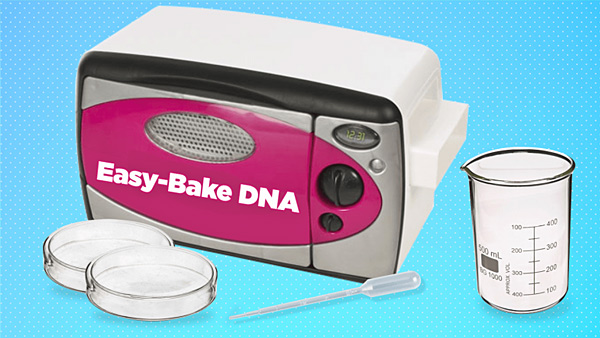
The gene drive is quickly becoming one of the most controversial technologies of our time. Its possibilities are at once spectacular and alarming: by using genetic engineering to override natural selection during reproduction, a gene drive could allow scientists to alter the genetic makeup of an entire species. This could be used to eliminate diseases and protect natural habitats—but could also go horribly wrong in the wrong hands.
Which is why the scientific community is freaking out over a group of undergraduate students that just came very close to creating a gene drive as part of a science competition.
The students, from the University of Minnesota, were inspired by a paper that explained how gene drive works and how to build one. A gene drive is so named for its ability to “drive” certain lab-selected traits into every offspring of an engineered species, eliminating competition with natural selection. Theoretically, this means that if released in the wild, over many generations the genetics of a lab-altered species could spread throughout an entire wild population. In case it’s not obvious, that is some pretty crazy stuff.
The students, who were competing in the international synthetic biology competition iGEM, didn’t actually successfully create a gene drive. They were interested in creating a “reversal drive” that could undo a gene drive’s effects in yeast. That would mean first creating a gene drive for yeast, and then an antidote to undo it. The students’ plan was to remove the ADE2 gene in yeast cells, turning red yeast pink, and then restore them to their original shade. They downloaded the genetic sequence for the gene drive from a scientific paper and sent the information to a DNA synthesis company, along with the sequence for a reversal drive they designed themselves. Then they got to work introducing the gene drive and its reversal drive into their yeast.
In the end, the students were foiled by inadequate lab equipment and too little time. When the competition deadline rolled around in October, they hadn’t even finished the first half of the project.
But the project raised eyebrows, by showing how easy it could be to create a potentially world-changing technology without a fancy lab or years of advanced training.
Read the rest at Gizmodo
Image: Carlos Poveda/Fusion
We invite you to add your charity or supporting organizations' news stories and coming events to PVAngels so we can share them with the world. Do it now!
Celebrate a Healthy Lifestyle
 From activities like hiking, swimming, bike riding and yoga, to restaurants offering healthy menus, Vallarta-Nayarit is the ideal place to continue - or start - your healthy lifestyle routine.
 Banderas Bay offers 34 miles of incomparable coastline in the states of Jalisco and Nayarit, and home to Puerto Vallarta and Riviera Nayarit's many great destinations.