
| Future of Mexico's National Anti-Corruption System Leaving Many Questions Unanswered Lexology | |
| go to original December 20, 2016 |
 |
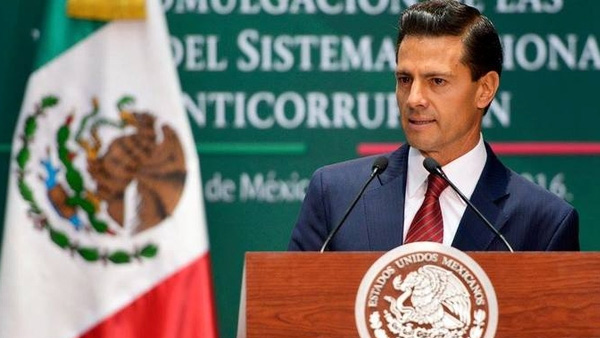
Mexican president Peña Nieto is credited for driving the quick establishment of the National Anti-Corruption System suggested by citizens and civil society, but also responsible for vetoing an important provision that was widely supported. (Presidency of the Republic)
After an aggressive grassroots campaign, in mid-2016, the Mexican government signaled substantial progress in its fight against corruption when it adopted a new anti-corruption program. The new legislation promised increased transparency and accountability of public officials and energized the international community about Mexico’s commitment to fight its long-standing corruption problems. Since enactment, however, progress towards implementing the provisions of the new law has slowed, leaving many questions about its future unanswered.
Mexico’s anti-corruption enforcement regime (the “National Anti-Corruption System”) was approved by President Peña Nieto on July 18, 2016. The National Anti-Corruption System, which will come into effect on July 19, 2017, provides for severe sanctions against individuals and entities that are found to have engaged in bribery, collusion, and influence peddling, among other acts. For instance, individuals face sanctions of up to twice the amount of the acquired benefits, temporary ineligibility to participate in procurement, leases, services or state-owned projects, and compensatory and/or punitive damages. Legal entities face similar sanctions - up to twice the amount of the benefit - and could be deemed ineligible to participate in the aforementioned projects for up to 10 years. Entities could also be subject to suspension of activities, partnership dissolution, and compensatory and/or punitive damages. The National Anti-Corruption System offers partial defenses, such as the existence of a current compliance or integrity program that includes effective reporting and whistleblower protection tools. Entities may also receive credit for self-reporting misconduct and collaborating with government investigations.
Along with the promulgation of stringent sanctions, the National Anti-Corruption System also created the role of independent anti-corruption prosecutor - the first of its type in Mexico’s history - to operate independently of the Mexican government. Importantly, National Anti-Corruption System is designed to enhance cooperation across federal, state, and municipal enforcement authorities and foreign authorities including the U.S. government.
Although the enforcement regime provides much needed transparency for a country riddled with corruption, we have yet to see the National Anti-Corruption System in action. Since its adoption nearly five months ago, there has been very little progress in establishing the framework needed to effectively implement the key provisions. In fact, the Mexican government has yet to even appoint the anti-corruption prosecutor. Recent developments could further exacerbate the period of stagnation.
Read the rest at Lexology
Related: Mexico Democracy: The Trio of Possibility (Mexico Voices)
We invite you to add your charity or supporting organizations' news stories and coming events to PVAngels so we can share them with the world. Do it now!
Celebrate a Healthy Lifestyle
 From activities like hiking, swimming, bike riding and yoga, to restaurants offering healthy menus, Vallarta-Nayarit is the ideal place to continue - or start - your healthy lifestyle routine.
 Banderas Bay offers 34 miles of incomparable coastline in the states of Jalisco and Nayarit, and home to Puerto Vallarta and Riviera Nayarit's many great destinations.