
| Mexicans' Thirst for Pulque Revives Tradition and Jobs Tim Gaynor - Al Jazeera | |
| go to original August 19, 2015 |
 |
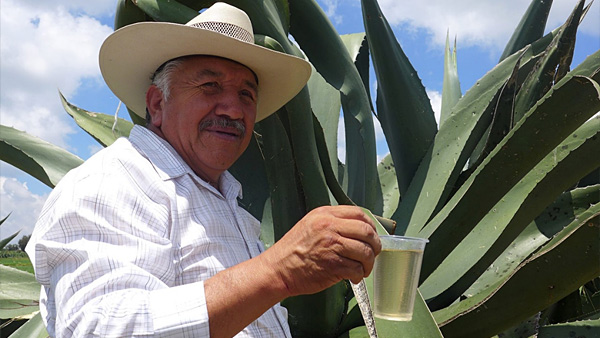
Pulque producer Senobio Becerra raises a cup of maguey sap in fields near Nanacamilpa, Mexico.
For decades, the clientele at the historic Los Paseos de Santa Anita pulquería was a dwindling group of working-class men with a taste for the tangy, viscous drink made from fermented cactus sap that was fast losing market share.
But on one recent afternoon, patrons packed into the tiny hole-in-the-wall bar is a mixed crowd of under-30 patrons who have developed a thirst for this historic Mexican drink brewed from unadulterated maguey juice.
“It's got a great taste … and it's a natural product that doesn't have chemicals in it,” Ivan Alejandro Camarillo said, explaining pulque's appeal as he sipped it from a brightly colored plastic beaker. “It's also really mellow and doesn't make you crazy” like other drinks, he added.
The 19-year-old restaurant worker is among thousands of young Mexicans rediscovering the so-called “nectar of the gods” first made more than 1,000 years ago by the Aztec civilization of the country’s central highlands and drunk by priests in rituals, including human sacrifice.
Subsequently widely made in haciendas dotted across the central highlands, pulque became the staple tipple of Mexico's working class until, amid false rumors that it was made with excrement, it was gradually eclipsed with the advent of beer. A decade or so ago pulque slipped into what producers and pulquería owners feared could be a terminal decline — until it was rediscovered by a new generation of drinkers.
Read the rest at Al Jazeera
We invite you to add your charity or supporting organizations' news stories and coming events to PVAngels so we can share them with the world. Do it now!
Celebrate a Healthy Lifestyle
 From activities like hiking, swimming, bike riding and yoga, to restaurants offering healthy menus, Vallarta-Nayarit is the ideal place to continue - or start - your healthy lifestyle routine.
 Banderas Bay offers 34 miles of incomparable coastline in the states of Jalisco and Nayarit, and home to Puerto Vallarta and Riviera Nayarit's many great destinations.