
| In Chiapas Mexico, Indigenous Women Blend Traditional, Modern Attire Marissa Revilla - Global Press Institute | |
| go to original December 7, 2014 |
 |
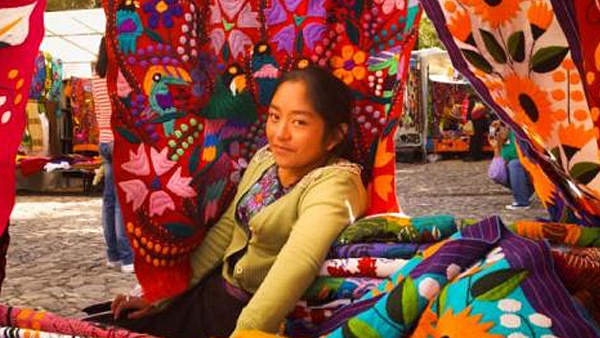
Teresa Gómez, a 13-year-old member of the Tsotsil ethnic group, sells textiles at the handicraft market Santo Domingo square in San Cristóbal de las Casas. In deference to modern preferences, she sells some blouses that are shorter than traditional garments. (Marissa Revilla/GPJ Mexico)
SAN CRISTÓBAL DE LAS CASAS – While urban culture celebrates modern clothing, many indigenous women in Chiapas say they feel most beautiful in their traditional clothing.
However, young women in the state bridge cultures, combining ethnic and modern styles, a trend that some older indigenous women disapprove of. It is important for indigenous women to express themselves through personal styles while preserving their ethnic heritage, they say.
Indigenous people make up close to 10 percent of Mexico’s population, according to the National Commission for the Development of Indigenous Peoples. Chiapas is home to the second-largest indigenous population in the country.
More than a million Chiapas residents – 27 percent of the population – are indigenous, according the most recent census conducted by the National Institute of Statistics and Geography.
Twelve ethnic groups live in the state, and the Tsotsil language is the second most spoken indigenous language in the state, according to the census.
Discrimination is the main problem facing ethnic groups in Mexico, ahead of poverty, lack of government benefits and language barriers, according to the 2010 National Survey on Discrimination in Mexico.
Influenced by racism, most Chiapas residents do not accept the natural beauty and dress of indigenous people, says Tania Cruz Salazar, a social anthropologist and researcher in gender studies at the San Cristóbal campus of the College of the Southern Border, a public research and higher education institution with campuses in various southern Mexican border cities.
Society imposes a mestizo ideal of beauty – a blend of European and indigenous heritage, says Cruz Salazar, who researched body perception and cultural racism for her doctoral dissertation.
Read the rest at Global Press Institute
We invite you to add your charity or supporting organizations' news stories and coming events to PVAngels so we can share them with the world. Do it now!
Celebrate a Healthy Lifestyle
 From activities like hiking, swimming, bike riding and yoga, to restaurants offering healthy menus, Vallarta-Nayarit is the ideal place to continue - or start - your healthy lifestyle routine.
 Banderas Bay offers 34 miles of incomparable coastline in the states of Jalisco and Nayarit, and home to Puerto Vallarta and Riviera Nayarit's many great destinations.