
| Confessions of a Pilot: Debunking the Biggest Air Travel Myths Patrick Smith - Y! Travel Journal | |
| go to original August 26, 2014 |
 |
Commercial air travel has long been a breeding ground for myths, urban legends, and plain old misunderstandings. Most of what people think they know about flying is wrong, and certain notions just never seem to die. Below are just a few of the most stubborn fallacies:
 |
|
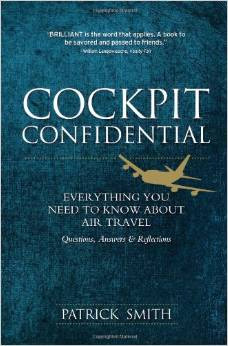
Cockpit Confidential: Everything You Need to Know About Air Travel: Questions, Answers, and Reflections by Patrick Smith Check it out on Amazon.com |
1. Flying is expensive
Actually, when adjusted for inflation, the average cost of an airline ticket has declined about 50 percent over the past three decades. Fares have risen slightly over the past year or so, but they are still far below what they were 30 years ago. And yes, this is after factoring in all of those add-on “unbundling” fees that airlines love and passengers so despise.
This is lost on many Americans, younger people especially, who don’t seem to realize that in years past only a fraction of Americans could afford to fly at all. In my parents’ generation it cost several thousand dollars in today’s money to travel to Europe. Even coast-to-coast trips were something relatively few people could afford. Today the idea of flying as a form of mass transit, with college kids jetting home for a long weekend or to Mexico for spring break, is very new.
2. Flying is growing more dangerous
The events of the past several months, punctuated by the losses of Malaysia Airlines Flights 370 and 17, have given many people the idea that flying has become less safe. In fact, it’s much safer than it used to be. Worldwide there are twice as many planes in the air as there were 25 years ago, yet the rate of fatal accidents, per miles flown, has been steadily falling. The International Civil Aviation Organization reports that for every million flights, the chance of a crash is one-sixth what it was in 1980. Globally, 2013 was the safest year in the history of modern commercial aviation. This year will be something of a correction, but we can’t expect every year to be the safest, and the overall trend shouldn’t be affected.
3. Modern commercial jets are so sophisticated that they essentially fly themselves.
This is the one that really gets my pulse racing — partly because we hear it so often, and because it’s so outrageously false.
A comparison between flying and medicine is maybe the best one: Modern technology helps a pilot fly a plane the way it helps a surgeon perform an operation. A jetliner can no more “fly itself” than an operating room can remove a tumor or perform an organ transplant “by itself.”
Cockpit automation is not flying the plane. The pilots are flying the plane through the automation. We still need to tell it what to do, when to do it, and how to do it. There are, for example, no fewer than six ways that I can set up an “automatic” climb or descent on the Boeing that I fly, depending on circumstances. And you’d be surprised how busy a cockpit can become — to the point of task saturation even with the autopilot on. Even the most routine flight is subject to countless contingencies and a tremendous amount of input from the crew.
Meanwhile more than 99 percent of landings, and a full 100 percent of takeoffs, are performed the “old-fashioned” way — by hand.
4. The air on planes is full of germs
Studies show that the air in a crowded cabin is less germ-laden than most other crowded spaces.
Passengers and crew breathe a mixture of fresh and recirculated air. Using this combination, rather than fresh air only, makes it easier to regulate temperature and helps maintain a bit of humidity. The recirculated portion is run through hospital-quality filters that capture at least 95 percent of airborne microbes, and there’s a total changeover of air every two or three minutes — far more frequently than occurs in buildings.
For those people who do get sick from flying, it’s probably not from what they are breathing but from what they are touching. Lavatory door handles, contaminated trays and armrests, and so on are the germ vectors of concern, not the air. A little hand sanitizer is a better safeguard than the masks I sometimes see travelers wearing.
Bonus fun fact: The Passenger Embellishment Factor (PEF) is a real thing:
This is my term for people’s tendency to exaggerate the sensations of flight. The altitudes, speeds, and angles you perceive often aren’t close to the real thing.
During turbulence, for example, many people believe that an airplane is dropping hundreds of feet at a time, when in reality, even in relatively heavy turbulence, the displacement is seldom more than 20 feet or so — the slightest twitch on the altimeter.
Patrick Smith is an airline pilot and the host of Askthepilot.com. His book Cockpit Confidential: Everything You Need to Know About Air Travel pulls back the curtain (literally) on the air travel industry.
See the original at Yahoo! News
We invite you to add your charity or supporting organizations' news stories and coming events to PVAngels so we can share them with the world. Do it now!
Celebrate a Healthy Lifestyle
 From activities like hiking, swimming, bike riding and yoga, to restaurants offering healthy menus, Vallarta-Nayarit is the ideal place to continue - or start - your healthy lifestyle routine.
 Banderas Bay offers 34 miles of incomparable coastline in the states of Jalisco and Nayarit, and home to Puerto Vallarta and Riviera Nayarit's many great destinations.