
| Voices from the Field: Mexico's Campesinos Resisting the Theft of Their Land Jeff Abbott - Upside Down World | |
| go to original August 22, 2014 |
 |
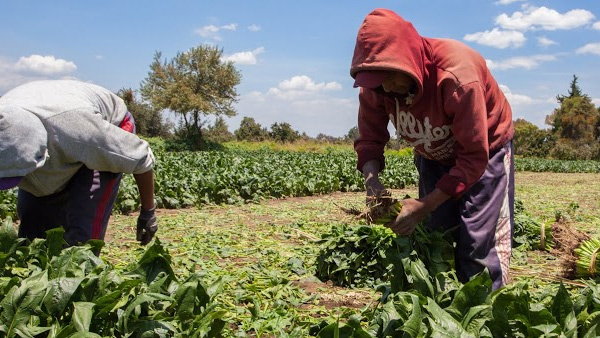
The campesinos of the Texmelucan valley in Puebla, Mexico, depend on the land for their livelihood. Their cultures and identities spring from these rich volcanic soils in the foothills of mount Popcatepetl and mount Izatacihutl. Yet, this all could be lost with the construction of a new highway that threatens to forcibly displace them from their land.
On August 10, members of the Peoples Front in Defense of the Land and Water (FPDTA – the Spanish acronym) joined more than 10,000 supporters in a demonstration in the capital city of Puebla. Protesters were calling for Governor Rafael Moreno Valle to end to the repression of the movement, and for the freedom of their imprisoned leaders who have been incarcerated on questionable charges since April.
The campesinos of Texmeulucan valley have organized to challenge the construction of the Western Arch highway, which is commonly referred to as “the project of death.” Since 2012, the FPDTA has worked to unite the 19 communities that are impacted by the construction of the highway project, as well as connect with communities affected by other mega-projects in Tlaxcala, Puebla, and Morelos.
The 26-mile highway is being constructed in order to cut down transit through the state of Puebla. Yet the construction comes at a high social cost. It directly affects 1,200 collective farms (ejidos) and small property owners. But the impact goes well beyond just the landowners and ejidos; each one hires between eight and 12 local laborers to assist in the planting, harvesting, and maintaining of the fields.
The leadership of the FPDTA has expressed a willingness to work with the government to find a solution, but both the state government of Puebla and the federal government have shown little interest in the concerns of the campesinos of Puebla.
“We want a plan where the campesinos can stay on their land,” said Izabel Topetón Morelos, one of those affected by the construction of the highway. “But the government has been unwilling to listen and respect the rights of the campesino.”
Despite their willingness to pursue a plan, those affected are still unwilling to give up or sell their land. Many of those affected by the project believe that the government has used underhanded tactics to encourage them to sell their land.
Read the rest at Upside Down World
We invite you to add your charity or supporting organizations' news stories and coming events to PVAngels so we can share them with the world. Do it now!
Celebrate a Healthy Lifestyle
 From activities like hiking, swimming, bike riding and yoga, to restaurants offering healthy menus, Vallarta-Nayarit is the ideal place to continue - or start - your healthy lifestyle routine.
 Banderas Bay offers 34 miles of incomparable coastline in the states of Jalisco and Nayarit, and home to Puerto Vallarta and Riviera Nayarit's many great destinations.