
| In Disappearing Mexican Jungle, it's Indigenous Tribes Verses Biologists Joshua Partlow - The Washington Post | |
| go to original July 8, 2014 |
 |
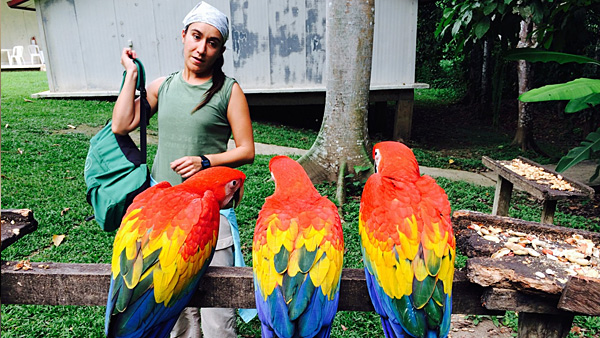
Biologist Alicia Barceinas and three scarlet macaw parrots at the research station in Chajul, Mexico. (Joshua Partlow/The Washington Post)
The Lacandon Jungle is the largest rain forest of its kind in North America and the most biodiverse ecosystem in Mexico. For thousands of years, humans have hunted and fished across its lush terrain. The Mayan kingdoms of Palenque and Tikal rose here. Over the past half-century, though, much of the jungle has been lost, as thousands of poor settlers — and larger mining, petroleum and timber interests — chopped and burned it to clear plots for farming, grazing and industrial enterprises. In 1971, the Mexican government set aside an area of the jungle slightly larger than Delaware to be shared among some 60 families of the indigenous Lacandon tribe. A few years later, it established the protected Montes Azules Biosphere Reserve over much of the same ground.
Unlike its U.S. counterpart, the Mexican federal government does not own its national parks, but its laws govern their use. The Lacandons, along with the Tzeltales and Choles tribespeople who also make up what is known as the Lacandon Community, owned the reserve land but were not allowed to clear or build on it.
As tribal populations have grown and more landless farmers have pushed into the jungle, the boundaries of the reserve and the rules governing its use have become matters of dispute. Illegal settlements have eaten away hundreds of square miles of the Lacandons’ original territory. The government has legalized some of the squatters’ holdings, buying back land from the Lacandon community to clarify local property rights.
Some settlers are living illegally inside the protected biosphere, and others have cleared forest just outside. Indigenous groups want to change the boundaries of the reserve so they have the right to the land, or the ability to sell it to the government. But Mexican officials do not want to allow more people inside the reserve.
“The real problem is agrarian. It is not environmental,” said Florencio Cruz Gomez, a representative of the indigenous groups. “We want to define the boundaries.”
Read the rest at The Washington Post
We invite you to add your charity or supporting organizations' news stories and coming events to PVAngels so we can share them with the world. Do it now!
Celebrate a Healthy Lifestyle
 From activities like hiking, swimming, bike riding and yoga, to restaurants offering healthy menus, Vallarta-Nayarit is the ideal place to continue - or start - your healthy lifestyle routine.
 Banderas Bay offers 34 miles of incomparable coastline in the states of Jalisco and Nayarit, and home to Puerto Vallarta and Riviera Nayarit's many great destinations.