
| Apps Want to Be Your New Doctor’s Office. Is That a Good Idea? Hannah Norman - The Washington Post | |
| go to original May 7, 2023 |
 |
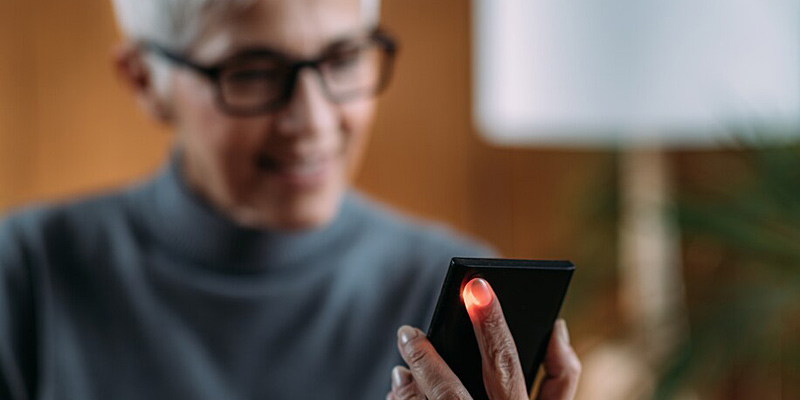

A woman measures her heart rate by placing her index finger on a smartphone camera. (iStock)
The same devices used to take selfies are being repurposed and commercialized for quick access to information needed for monitoring patient health. A fingertip pressed against a phone’s camera lens can measure a heart rate. The microphone, kept by the bedside, can screen for sleep apnea.
In the best of this new world, the data is conveyed remotely to a medical professional for the convenience and comfort of the patient — all without the need for costly hardware.
But using smartphones as diagnostic tools remains a work in progress. Although doctors and their patients have found some real-world success, experts said their overall potential remains unfulfilled and uncertain.
Smartphones come packed with sensors capable of monitoring a patient’s vital signs. They can help assess people for concussions, watch for atrial fibrillation and conduct mental health wellness checks, to name the uses of a few nascent applications.
Eager companies and researchers are tapping into phones’ built-in cameras and light sensors; microphones; accelerometers, which detect body movements; gyroscopes; and even speakers. The apps then use artificial intelligence software to analyze the collected sights and sounds to create an easy connection between patients and physicians. In 2021, more than 350,000 digital health products were available in app stores, according to a Grand View Research report.
“It’s very hard to put devices into the patient home or in the hospital, but everybody is just walking around with a cellphone that has a network connection,” said Andrew Gostine, a physician and CEO of the sensor network company Artisight. Most Americans own a smartphone, including more than 60 percent of people 65 and over, according to the Pew Research Center. The pandemic has also made people more comfortable with virtual care.
The makers of some of these products have sought clearance from the Food and Drug Administration to market them as medical devices. Others have been designated as exempt from the regulatory process, placed in the same clinical classification as a Band-Aid. But how the agency handles AI and machine learning-based medical devices is still being adjusted to reflect software’s adaptive nature. Ensuring accuracy and clinical validation is crucial to securing buy-in from health-care providers. And many tools still need fine-tuning, said Eugene Yang, a clinical professor of medicine at the University of Washington.
Judging these new technologies is difficult because they rely on algorithms built by machine learning and artificial intelligence to collect data, rather than the physical tools typically used in hospitals. So researchers cannot “compare apples to apples” with medical industry standards, Yang said. Failure to build in such assurances can undermine the technology’s goals of easing costs and access because a doctor still must verify results, he added.
Big tech companies such as Google have heavily invested in the area, catering to clinicians and in-home caregivers, as well as consumers. Currently, Google Fit app users can check their heart rate by placing their finger on the rear-facing camera lens or track their breathing rate using the front-facing camera.
Read the rest at The Washington Post
We invite you to add your charity or supporting organizations' news stories and coming events to PVAngels so we can share them with the world. Do it now!
 Banderas Bay offers 34 miles of incomparable coastline in the states of Jalisco and Nayarit, and home to Puerto Vallarta and Riviera Nayarit's many great destinations.