
| What New Longevity Research Says About Adding Healthy Years to Your Life Matt Fuchs - Washington Post | |
| go to original September 5, 2022 |
 |
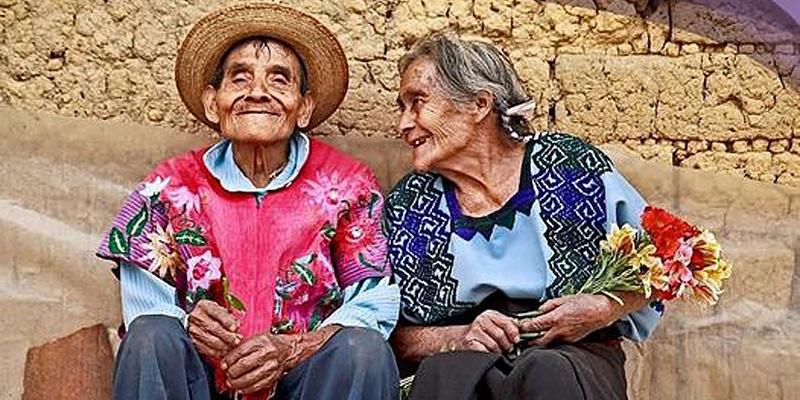
Death comes for us all. But recent research points to interventions in diet, exercise and mental outlook that could slow down aging and age-related diseases — without risky biohacks such as unproven gene therapies. A multidisciplinary approach involving these evidence-based strategies “could get it all right,” said Valter Longo, a biochemist who runs the Longevity Institute at the University of Southern California’s Leonard Davis School of Gerontology.
There’s a debate, however, about how much we can increase our longevity. All humans share 99.9 percent of their genes. This explains why even “super-agers,” born with tiny genetic differences that promote longevity, almost never surpass 110. (Jeanne Louise Calment of France was an outlier, living until the age of 122, the current record.) Some animals make it well beyond that mark, according to Jan Vijg, a molecular geneticist at the Albert Einstein College of Medicine. Scientists know just one way for humans to live 170 years like a giant tortoise: become a giant tortoise.
Some experts do find it likely that someone will set a record for our species by the end of this century. Statisticians have observed a “mortality plateau” for very old people; although the chance of dying in a given year goes up with age, the odds seem to stop increasing after 105. Beyond this plateau, it’s basically a coin toss every year: Heads you’ll see your next birthday, tails you won’t.
But the mortality plateau is often debated. Even if it’s true that the risk of death levels off, this won’t necessarily result in super-agers living longer than before. Susan Alberts, a Duke University primatologist, published a paper that compared the human rate of aging with other primates. The maximum human life expectancy has increased by about three months per year since the mid-1800s, but that can be explained by fewer early and midlife deaths. Alberts found that the rate of decline during old age has stayed the same, mirroring other species. She believes that maximum human life span could be extended by continuing to “avert early and midlife deaths,” which simply increases the pool of people who could live a really long time.
Time will tell who’s right regarding the life span of our species. What’s clear is that certain lifestyles help individuals live longer than they otherwise would — including the genetically blessed. Harvard researchers found that healthy habits add nearly 15 years of life expectancy. “That’s over $100 trillion in health-care savings,” said Harvard biologist David Sinclair.
Read the rest at Washington Post
Related: The Logistics of Death Can Be Overwhelming. New Apps Can Offer Help. (Washington Post)
Related: Creativity May Be Key to Healthy Aging. Here Are Ways to Stay Inspired. (Washington Post)
 Learn about La Casa de las Lunas Puerto Vallarta
We invite you to add your charity or supporting organizations' news stories and coming events to PVAngels so we can share them with the world. Do it now!
 Banderas Bay offers 34 miles of incomparable coastline in the states of Jalisco and Nayarit, and home to Puerto Vallarta and Riviera Nayarit's many great destinations.