
| Sustainability and Mexican Food Without the Meat Lauren Taylor - CyprusMail | |
| go to original May 31, 2022 |
 |
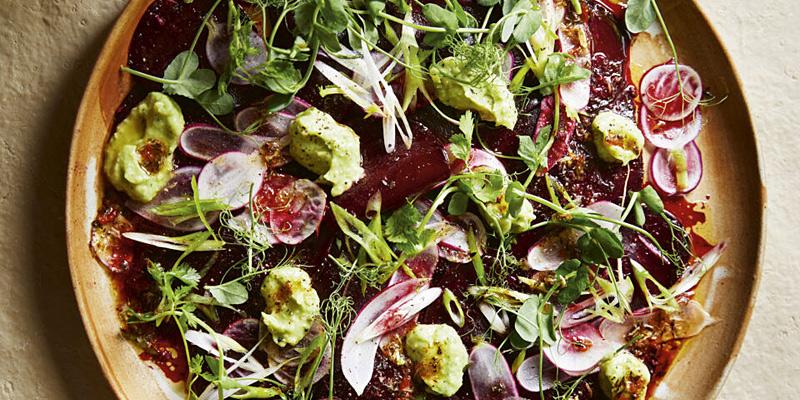

Thomasina Miers' beetroot ceviche with tarragon, blood orange and avocado crema. (Tara Fisher/PA)
Mexican cuisine might conjure up images of tacos al pastor (with barbecue pork), meat-packed enchiladas or fish-topped tostadas – but Thomasina Miers says, historically, Mexican fare is much more heavily focused on fruit and vegetables.
“It’s one of the most biodiverse countries in the world and the foundations of the diet are corn, beans, the courgette plant, tomatoes, chilies and wild herbs,” says Miers, 46. Mexico has around 50,000 native plant species (by some estimates), with some 200 varieties of chilli alone.
Protein often came from moles (a traditional type of sauce made from beans), “enriched with lots of ground seeds”, adds Miers. “The authentic way [to make it] is often very complicated, with 37 ingredients.”
The idea of packing your diet with a rainbow of vegetables is very much the focus of her new book, Meat-Free Mexican. “I think we’re really beginning to think about food as medicine much more these days, which I think is completely right,” she says. Plus, “people are looking at eating less meat anyway, because environmentally, how much meat we’re eating is a total catastrophe.”
For Miers – who won MasterChef in 2005 and is the brains behind the hugely successful Wahaca chain of Mexican restaurants (where 50% of the menus are now vegetarian) – says: “I love that ancient Mexican food and the modern way we’re all kind of starting to eat, feel very in synergy together.”
From plant-based versions of Mexican classics, like beetroot ceviche, celeriac and chard enchiladas, chickpea rancheros and cauliflower tacos, to vegetable dishes that celebrate Mexican spices and flavorings, like chipotle-tamarind baked sweet potato gratin and baked polenta with veracruzan sauce, her eighth cookbook (and her third Mexican-focused) is, like all of her recipes, for “people who are busy”. So although some are longer, it all feels do-able for the time-starved generation.
For the future of our planet and for our kids, we have to eat less meat, she urges. We’ve got too used to eating whatever we want, at whatever cost to the planet, she suggests. But we can still enjoy a lot of food responsibly. “It’s not about having whatever you want, whenever you want, but it is about favor and taste, and joy,” says Miers.
Read the rest at CyprusMail
Related: A Brief History of Mexican Cuisine (Mexicanist)
Related: A Flavorful Field Guide to Foraging (Ted.com)
We invite you to add your charity or supporting organizations' news stories and coming events to PVAngels so we can share them with the world. Do it now!
 Banderas Bay offers 34 miles of incomparable coastline in the states of Jalisco and Nayarit, and home to Puerto Vallarta and Riviera Nayarit's many great destinations.