
| Why It’s Hard to Fall Asleep, and Tips to Make It Easier Allyson Chiu - The Washington Post | |
| go to original December 20, 2021 |
 |
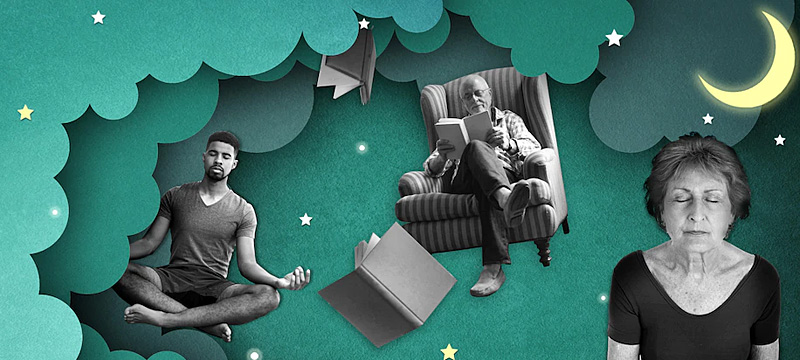

Falling asleep is a complicated process that takes time, experts say (Washington Post)
Sleep doesn’t always come easily to Rebecca Robbins. That might be surprising to people who know her, because Robbins is a sleep researcher, but “I am not immune to these things,” she said.
“It would be wonderful if we could just turn our brains off like a light switch or power our brains down like our cellphone,” said Robbins, an instructor in medicine at Harvard Medical School. “But unfortunately, it’s not that easy.”
Falling asleep, Robbins and other experts emphasize, is a complicated process that takes time. In fact, falling asleep right away may actually be a sign that you aren’t well rested, Robbins said. After the lights go off, experts say, it’s normal to take anywhere from 10 to about 30 minutes to fall asleep.
And having occasional difficulty sleeping is to be expected. “If your standard is ‘I’m going to sleep great seven days a week,’ then you’re going to be really disappointed,” said Raj Dasgupta, a pulmonary and sleep specialist and spokesperson for the American Academy of Sleep Medicine (AASM).
Craig Canapari, director of the Yale Pediatric Sleep Center, agreed. “It is really important to have reasonable expectations about sleep and also realizing that you can only set the table for sleep,” he said. “You can invite it to come, but you can’t control when it happens.”
Experts’ go-to research-backed recommendations for addressing sleep difficulties are probably familiar to any person who has struggled with falling asleep: prioritize a healthy bedtime routine, keep a consistent sleep schedule and manage stress, among others. “If you want to sleep better, you have to work at it,” Canapari said.
Read the rest at Washington Post
Related: How to Choose the Best Sleeping Position, and Why It Matters (Washington Post)
Related: How to Sleep Better (Nature Sound Retreat)
Related: Why You Snore, When to Be Concerned and How to Stop (Washington Post)
We invite you to add your charity or supporting organizations' news stories and coming events to PVAngels so we can share them with the world. Do it now!
 Banderas Bay offers 34 miles of incomparable coastline in the states of Jalisco and Nayarit, and home to Puerto Vallarta and Riviera Nayarit's many great destinations.